
Sustainable Interior Design in Mallorca: Eco-Friendly Materials and Local Craft
Sustainability Is Not New to Mallorca
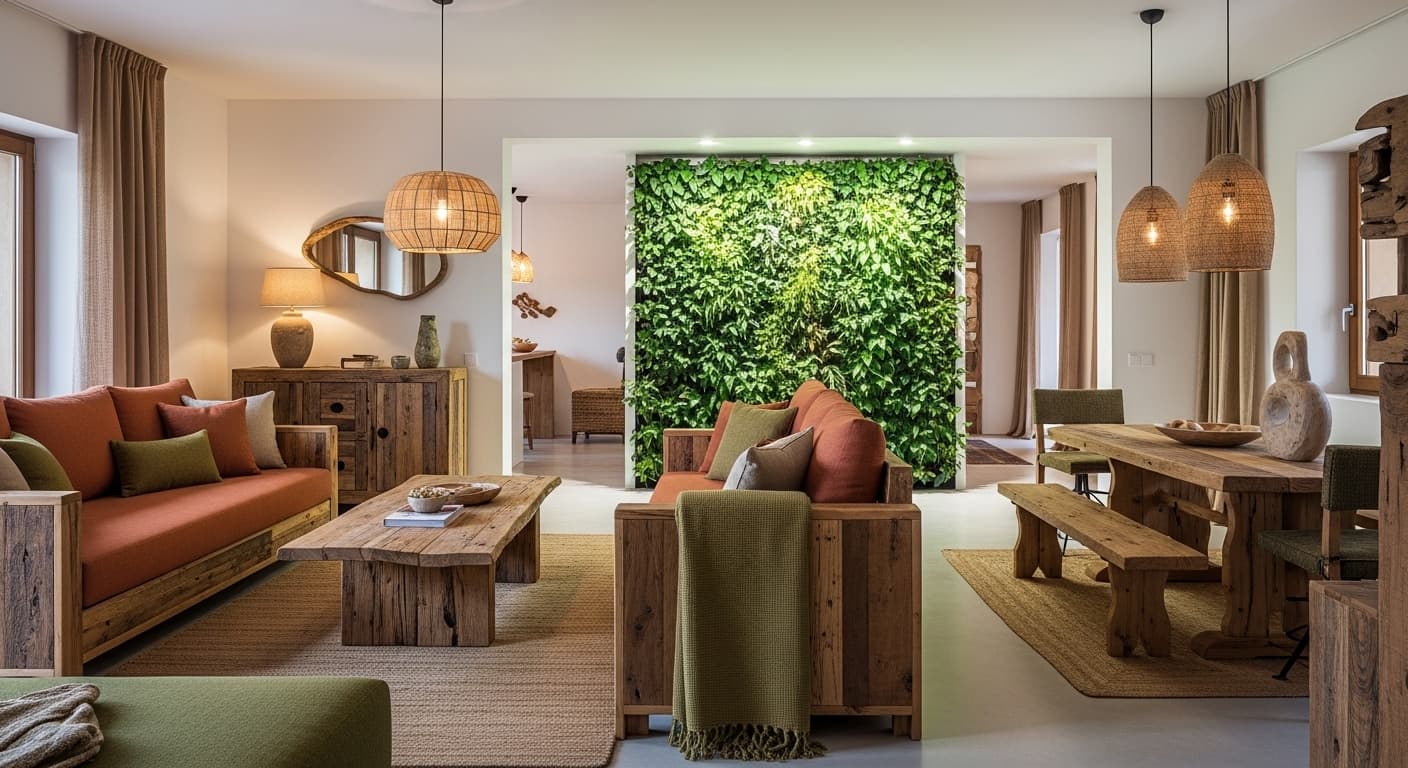
When we talk about sustainable interior design in 2026, it is easy to assume that we are discussing something novel — a response to the climate crisis that requires entirely new materials, new technologies, and new ways of thinking. But walk through a centuries-old finca in the Mallorcan countryside, examine the thick marès stone walls that stay cool without air conditioning, feel the terracotta floors that store warmth from the winter sun, and you realise that sustainable design has been practised on this island for generations. The ancestors of today's Mallorcan builders understood something fundamental: when you live on an island with limited resources, you build with what you have, you waste nothing, and you design for permanence.
This article explores how Mallorca's building traditions, locally sourced materials, and thriving artisan community create a compelling model for sustainable interior design. The goal is not to replicate the past, but to learn from it — combining traditional wisdom with contemporary techniques to create homes that are both environmentally responsible and genuinely beautiful.
Locally Sourced Materials: The Foundation of Sustainable Design
Marès Stone: Mallorca's Signature Material
Marès is the honey-coloured sedimentary sandstone that has defined Mallorcan architecture for centuries. Quarried directly on the island — historically from sites near Santanyí, Felanitx, and Manacor — this stone has an extraordinarily low transport footprint compared to imported materials. Its porous structure provides natural thermal insulation, keeping interiors cool in summer and retaining warmth in winter. A marès wall of traditional thickness can reduce heating and cooling energy requirements by 30 to 40 percent compared to modern cavity wall construction.
In interior design, marès works beautifully as feature walls, fireplace surrounds, kitchen backsplashes, and bathroom accents. Its warm tone and soft texture complement virtually any design style, from rustic traditional to sharp contemporary. Because it is a natural material that requires minimal processing — quarrying and cutting rather than energy-intensive manufacturing — its embodied carbon is remarkably low.
When specifying marès, source it from active Mallorcan quarries that practise responsible extraction. Many quarries on the island have operated for generations and manage their sites to minimise landscape impact and allow gradual regeneration of exhausted areas. This is sustainability in practice: a material that is local, low-energy, beautiful, and managed responsibly.
Posidonia: From Seagrass to Insulation
Posidonia oceanica, the seagrass that forms vast meadows on Mallorca's seabed, has been used as building insulation on the Balearic Islands for centuries. Dried posidonia leaves were traditionally packed into wall cavities and roof spaces, providing excellent thermal and acoustic insulation without any chemical treatment or industrial processing. The material is naturally fire-resistant, repels insects, and does not rot — properties that synthetic insulation manufacturers spend millions trying to replicate.
Contemporary companies are now producing standardised posidonia insulation panels that meet modern building regulations while honouring this traditional technique. These panels are manufactured from posidonia that washes ashore naturally — a resource that would otherwise be treated as waste. Using posidonia insulation in a Mallorcan renovation project is a powerful statement of local sustainability: a material that comes from the island's own waters, processed with minimal energy, delivering performance that rivals or exceeds synthetic alternatives.
Olive Wood: Beauty from Ancient Trees
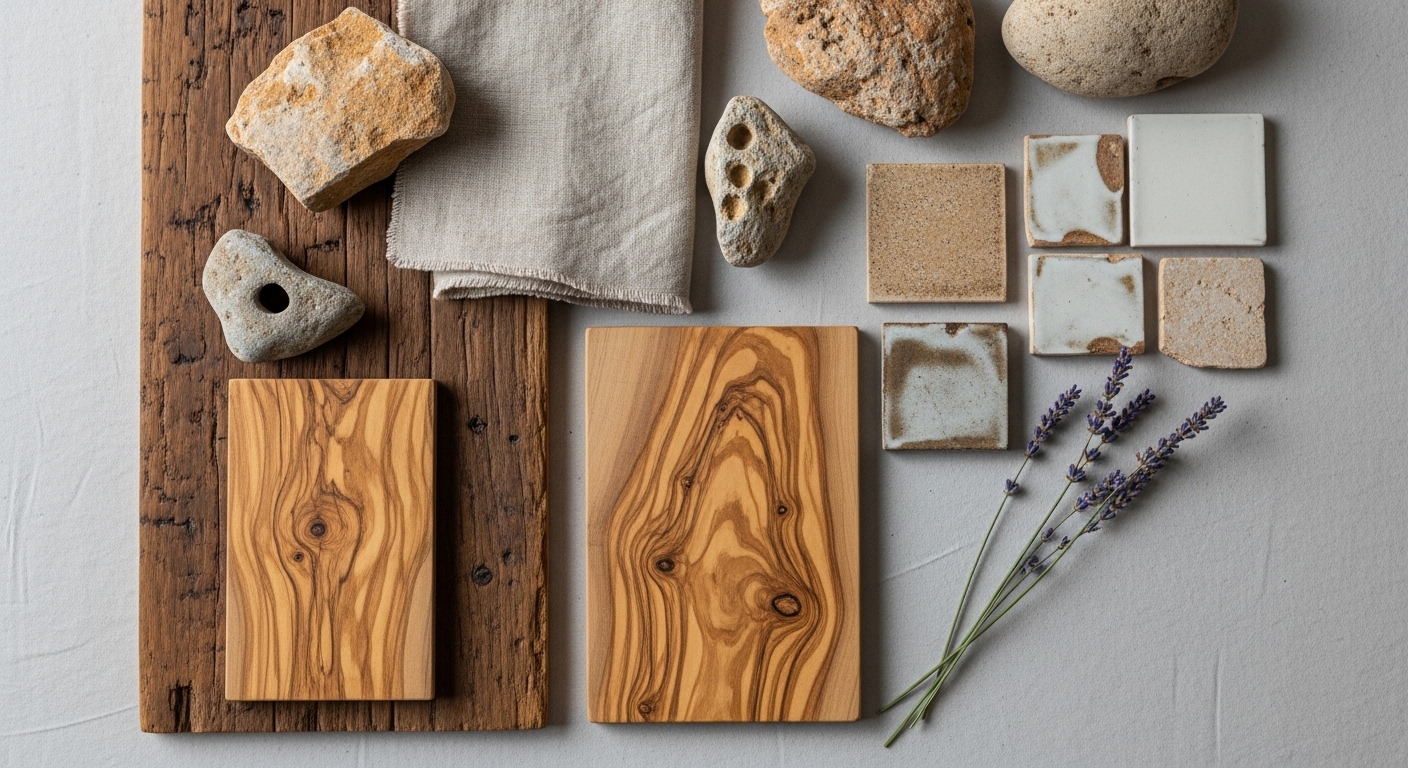
Mallorca's olive trees are among the most iconic elements of its landscape, with some specimens estimated to be over a thousand years old. When olive trees are pruned or occasionally removed, the wood they yield is extraordinarily beautiful — dense, richly grained, and warm in colour. In sustainable interior design, olive wood works magnificently for furniture, shelving, kitchen utensils, decorative objects, and custom joinery.
The key to using olive wood sustainably is sourcing it from managed groves where tree removal is part of agricultural practice rather than deforestation. Several Mallorcan woodworkers specialise in reclaiming olive wood from agricultural clearance and storm damage, transforming what would otherwise be firewood into furniture and interior elements of remarkable beauty. Each piece carries the unique grain patterns and colour variations that only centuries of slow growth can produce — a living connection to the island's agricultural heritage.
Traditional Building Techniques That Are Inherently Sustainable
Thick Stone Walls and Thermal Mass
The thick stone walls characteristic of traditional Mallorcan construction are not merely aesthetic — they are a sophisticated passive climate control system. Stone walls of 50 to 80 centimetres thickness store thermal energy during the day and release it slowly at night, dramatically reducing the temperature swings that force modern thin-walled buildings to rely on energy-intensive air conditioning. In summer, the thermal mass keeps interiors naturally cool until well into the afternoon. In winter, walls that have absorbed daytime solar heat release that warmth gradually through the evening.
When renovating traditional Mallorcan properties, preserving and where possible enhancing this thermal mass is one of the most impactful sustainability decisions you can make. Resist the temptation to add internal insulation that separates the interior from the thermal mass of the stone — this is a common renovation mistake that actually degrades the building's passive climate performance.
Natural Ventilation Through Cross-Breezes
Traditional Mallorcan architecture was designed around natural ventilation long before mechanical cooling existed. Tall ceilings, strategically placed windows, central courtyards, and the interplay between thick walls and open shutters create air movement patterns that keep interiors comfortable without electricity. The central courtyard — the patio — functions as a thermal chimney, drawing cool air through ground-floor rooms and venting warm air upward.
Contemporary sustainable design on Mallorca should incorporate these principles rather than relying solely on mechanical systems. Even in new construction, designing for cross-ventilation, incorporating internal courtyards, and using operable windows and shutters can dramatically reduce air conditioning dependency.
Lime Plaster and Breathable Walls
Traditional Mallorcan walls were finished with lime plaster — a material that allows moisture to pass through the wall rather than trapping it. This breathability prevents condensation, regulates indoor humidity naturally, and contributes to a healthier indoor environment. Lime plaster also has a significantly lower carbon footprint than cement-based alternatives, as lime production requires lower kiln temperatures and the material actually reabsorbs carbon dioxide as it cures.
In contemporary Mallorcan interiors, lime plaster offers a beautiful, textured finish that works with both traditional and modern design aesthetics. It can be polished to a smooth, almost marble-like surface (tadelakt technique, popular in bathrooms) or left with a soft, matte texture that catches light beautifully. Unlike synthetic paints, lime plaster is free of volatile organic compounds, contributing to better indoor air quality.
Passive Cooling Design for the Mediterranean Climate
Air conditioning accounts for a significant portion of energy consumption in Mallorcan homes, particularly during the intense summer months from June through September. Passive cooling strategies — design decisions that reduce interior temperatures without mechanical systems — are among the most impactful sustainability measures available.
Exterior shading is the first line of defence. Traditional Mallorcan persianas (louvred shutters) allow ventilation while blocking direct sunlight. Deep overhangs, pergolas with deciduous climbing plants, and exterior fabric awnings all reduce solar heat gain. The most effective shading blocks sunlight before it reaches the glass — exterior shading is four to five times more effective than internal blinds at reducing heat gain.
Cool roof technologies — light-coloured or reflective roof surfaces that reduce heat absorption — are another effective measure for Mallorcan homes. Traditional whitewashed roofs performed this function instinctively; modern cool roof coatings offer even better performance with the same principle.
Green roofs and walls, while less common in Mallorca than in northern Europe, offer dual benefits: insulation that reduces both heating and cooling loads, and habitat creation that supports biodiversity. Sedum and other drought-tolerant succulents are well-suited to Mallorcan green roof applications, requiring minimal irrigation once established.
Solar Integration in Mallorcan Homes
With approximately 300 days of sunshine per year and some of Europe's highest solar irradiation levels, Mallorca is naturally suited to solar energy generation. Integrating photovoltaic panels into the design of a home — rather than treating them as an afterthought bolted onto the roof — is an opportunity to make solar technology part of the architecture rather than an addition to it.
Building-integrated photovoltaics (BIPV) replace conventional building materials — roof tiles, facade cladding, or balustrade panels — with photovoltaic elements that generate electricity while performing their architectural function. Solar roof tiles, now available from several manufacturers, are visually indistinguishable from traditional roofing materials while generating clean energy throughout the day.
Solar thermal systems for domestic hot water are one of the most cost-effective renewable energy installations in Mallorca, with payback periods typically under five years. In a climate where hot water demand peaks during the sunnier months (outdoor showers, pool top-ups, increased laundry), solar thermal is a natural fit.
Water Recycling and Conservation
Water is Mallorca's most precious and most stressed natural resource. The island's aquifers have been over-extracted for decades, and summer water restrictions are becoming increasingly common. Sustainable interior design in Mallorca must address water conservation as a fundamental priority, not an optional extra.
Greywater recycling systems capture water from showers, baths, and basins, filter it, and redirect it for garden irrigation or toilet flushing. A typical Mallorcan household can reduce its mains water consumption by 30 to 40 percent with a greywater system — savings that are both environmentally significant and financially meaningful given rising water costs on the island.
Rainwater harvesting, while less productive in Mallorca than in wetter climates, still provides a valuable supplementary water source when properly designed. Traditional Mallorcan fincas often incorporated underground cisterns (aljubs) that collected rainwater from roof surfaces — a technique that contemporary sustainable design can update with modern filtration and distribution systems.
Within the home, low-flow fixtures, dual-flush toilets, and sensor-activated taps reduce water consumption without compromising comfort. Efficient dishwashers and washing machines, specified during the design phase, further reduce demand. Every litre saved contributes to the sustainability of the island's water system.
Local Artisans and Craftspeople
One of the most overlooked aspects of sustainable design is the human dimension. Choosing locally made furniture, fixtures, and decorative elements over mass-produced imports supports Mallorca's craft economy, preserves traditional skills, and dramatically reduces the transport emissions associated with global supply chains.
Mallorca supports a remarkable community of artisans: ceramicists in Pòrtol and Marratxí, glass-blowers in Algaida at the Gordiola factory, weavers producing traditional robes de llengües textiles, ironworkers forging custom hardware, and stone masons working marès with techniques unchanged for centuries. Engaging these craftspeople in your interior design project creates unique, site-specific elements that cannot be replicated — a direct contrast to the identical, mass-produced interiors that characterise globalised design.
The economics of local craft are more favourable than many assume. While a handmade ceramic tile may cost more per unit than a factory product, it arrives without international shipping costs, customs delays, or the carbon emissions of long-distance transport. The total installed cost is often comparable, while the aesthetic, cultural, and environmental value is incomparably higher.
Certifications and Regulations
Several certification systems provide frameworks for measuring and validating sustainable design in Mallorca. BREEAM, LEED, and the Spanish VERDE system all offer residential certification paths that assess energy performance, material sustainability, water efficiency, and indoor environmental quality. While certification is not mandatory for residential projects in Mallorca, pursuing it provides a structured approach to sustainable design and adds measurable value to the property.
The Balearic Government has progressively strengthened building energy regulations, with the current technical building code (Código Técnico de la Edificación) requiring minimum energy performance standards that align with European norms. New construction must achieve minimum energy ratings, and major renovations must demonstrate improved performance. These regulations are expected to tighten further as Spain works toward its 2030 and 2050 climate commitments.
The Circular Economy in Interior Design
The circular economy — designing out waste, keeping materials in use, and regenerating natural systems — offers a powerful framework for sustainable interior design in Mallorca. In practice, this means specifying materials that can be recycled or repurposed at end of life, choosing furniture that is repairable rather than disposable, and incorporating reclaimed materials that give new life to resources that would otherwise enter the waste stream.
Reclaimed timber, salvaged tiles, antique furniture, and architectural elements from demolished buildings all contribute to a circular approach. Mallorca has several reclamation yards and antique dealers that specialise in architectural salvage — sources of unique materials with history, character, and zero manufacturing footprint. A door from a demolished Palma townhouse, a set of tiles from a renovated finca, or a beam from a restructured agricultural building carries stories and embodied history that new materials simply cannot replicate.
Designing for disassembly is another circular principle that applies to interior design. Specifying mechanical fixings (screws, bolts, clips) rather than adhesives allows materials to be separated and reused at the end of a fit-out's life. Choosing modular furniture systems that can be reconfigured rather than replaced extends useful life and reduces waste.
Conclusion: Mallorca as a Model for Sustainable Design
Mallorca offers something rare in the global conversation about sustainable design: a living tradition of building with local materials, respecting natural systems, and creating beauty that endures. The island's constraints — limited resources, water scarcity, intense climate — have historically driven innovation that we now recognise as sustainability. The challenge for contemporary designers and homeowners is to honour this tradition while embracing the technologies and techniques that allow us to go further.
Sustainable interior design in Mallorca is not about sacrifice or compromise. It is about making choices that are simultaneously better for the environment, better for the local economy, and more beautiful than their conventional alternatives. A marès stone wall is more beautiful than plasterboard. Olive wood furniture is more characterful than factory-made particleboard. Lime plaster is healthier than synthetic paint. Posidonia insulation is more poetic than fibreglass. When sustainability and beauty align this naturally, the case for sustainable design becomes irresistible.