
Lighting Design in Mallorca: How to Make the Most of Mediterranean Natural Light
The Quality of Light That Makes Mallorca Unique
There is a reason artists, photographers, and architects have been drawn to Mallorca for over a century. The quality of light on this island is genuinely extraordinary — a luminous, warm clarity that transforms ordinary surfaces into something radiant. The Mediterranean sun sits at a lower angle than tropical light, casting longer shadows and creating a play of contrast that gives depth and dimension to every room it touches. This is not just romantic observation; it is a design factor that fundamentally shapes how interiors should be conceived on the island.
Mallorca receives approximately 300 days of sunshine per year, with average illumination levels that far exceed those of northern Europe. The light here has a golden warmth in the morning, a white intensity at midday, and a honeyed softness in the late afternoon that painters have tried to capture for generations. Understanding and designing around this light is not optional — it is the single most important factor in creating interiors that feel authentically Mallorcan.
The challenge, and the opportunity, lies in the fact that this abundant light changes dramatically throughout the day and across seasons. A room that feels perfectly balanced at ten in the morning may become unbearably bright by two in the afternoon. A north-facing space that seems dim in December can feel pleasantly cool and even in July. Great lighting design in Mallorca means working with these rhythms, not against them.
Designing Around Natural Light: Orientation and Window Placement
South-Facing Rooms: The Mediterranean Ideal
South-facing rooms receive the most consistent natural light throughout the day and across seasons. In Mallorca, this orientation is ideal for living rooms, dining areas, and any space where you want warmth and brightness. The winter sun, low on the horizon, penetrates deep into south-facing rooms, providing passive solar heating that reduces energy costs during the mild but occasionally chilly Mallorcan winter.
However, south-facing rooms in Mallorca also require careful solar management in summer. Without adequate shading, direct sunlight can overheat spaces and damage furniture, fabrics, and artwork. Traditional Mallorcan architecture solved this problem elegantly with deep window reveals, exterior shutters (persianas), and covered terraces that shade the facade during the high summer sun while allowing lower winter light to enter. Modern design should learn from these solutions rather than ignore them.
East-Facing Rooms: Morning Warmth
East-facing rooms capture the beautiful morning light that is one of Mallorca's greatest pleasures. Bedrooms, breakfast rooms, and home offices benefit enormously from this orientation. The morning sun is warm but not harsh, and it creates a gentle, energising atmosphere that is ideal for starting the day. By midday, east-facing rooms receive indirect light, keeping them cool during the hottest hours — a natural advantage in the Mallorcan summer.
West-Facing Rooms: Sunset Drama
West-facing rooms in Mallorca receive intense afternoon and evening light, including the dramatic golden-hour illumination that makes sunset watching a daily ritual across the island. These rooms work well for living spaces and terraces where the evening light is celebrated. In towns like Deià, Valldemossa, and the western coast around Andratx, west-facing living rooms offer spectacular sunset views that become the focal point of the entire home.
The trade-off is significant summer heat gain. West-facing glazing should be carefully sized and protected with exterior shading — motorised blinds, deep overhangs, or deciduous planting that provides shade in summer and allows light through in winter.
North-Facing Rooms: Consistent, Cool Light
North-facing rooms receive the most consistent, even light throughout the day — cool, diffused, and shadow-free. This makes them ideal for art studios, home offices, and rooms where colour accuracy matters. In Mallorca's warm climate, north-facing spaces also stay naturally cooler, which is a significant advantage for rooms used primarily during daytime hours in summer.
Window Design for Mediterranean Light
The design of windows in a Mallorcan home is far more than an architectural detail — it is the primary mechanism for controlling the relationship between interior and exterior light. Traditional Mallorcan windows are tall and relatively narrow, set deep within thick stone walls that create natural light shelves and reduce glare. This proportioning is not arbitrary; it evolved over centuries to manage intense Mediterranean light while maximising ventilation.
In contemporary Mallorcan homes, the trend toward floor-to-ceiling glazing offers dramatic views and abundant light but creates challenges that traditional architecture already solved. Without careful orientation and shading, large glass areas can create greenhouse conditions, glare that makes spaces unusable, and energy costs that spiral during summer. The best contemporary design on the island combines generous glazing with deep overhangs, exterior screens, and high-performance glass that filters UV and infrared radiation while maintaining visual clarity.
Artificial Lighting: Creating Layers for Day and Night
The Three Layers of Interior Lighting
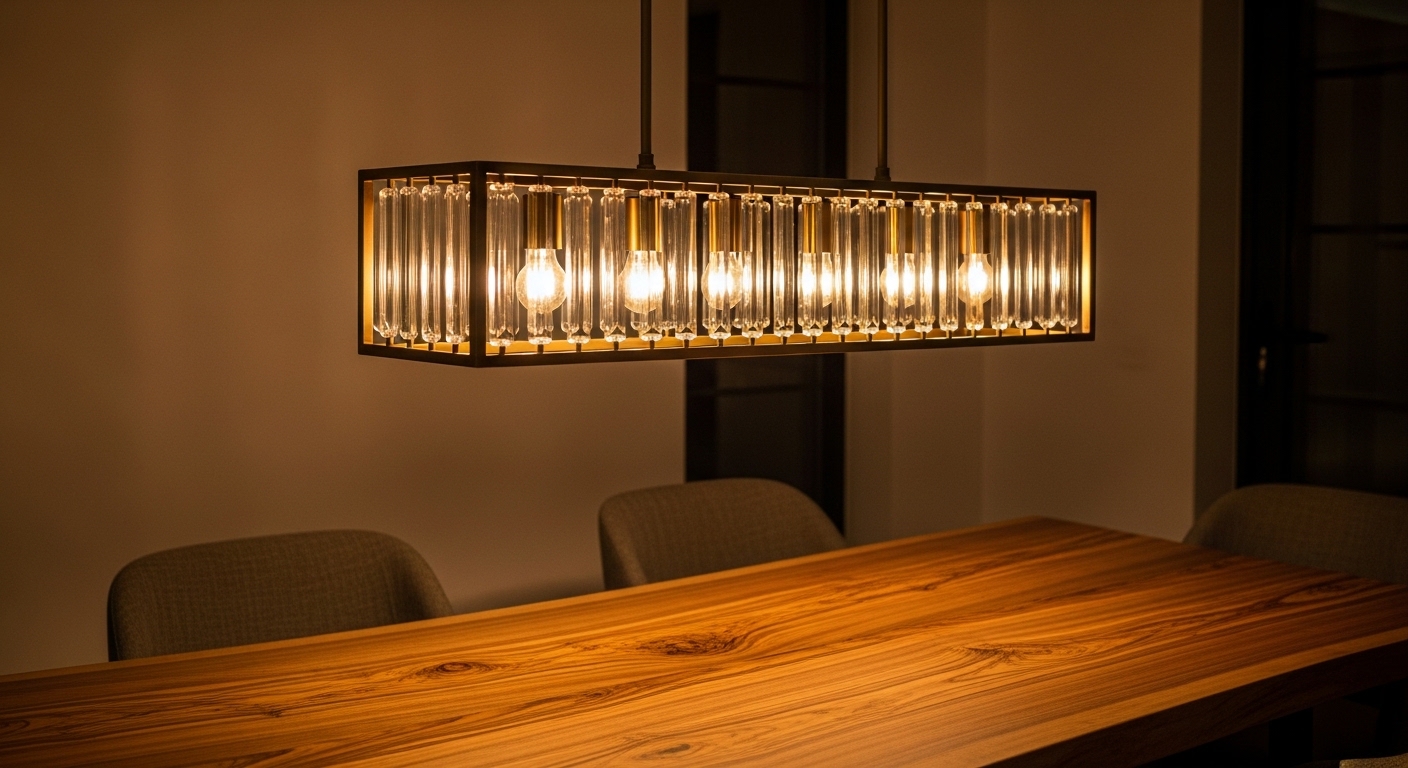
While Mallorca's natural light is extraordinary, no home can rely on daylight alone. A well-designed artificial lighting scheme provides three complementary layers that work together to create atmosphere, functionality, and visual depth at any hour.
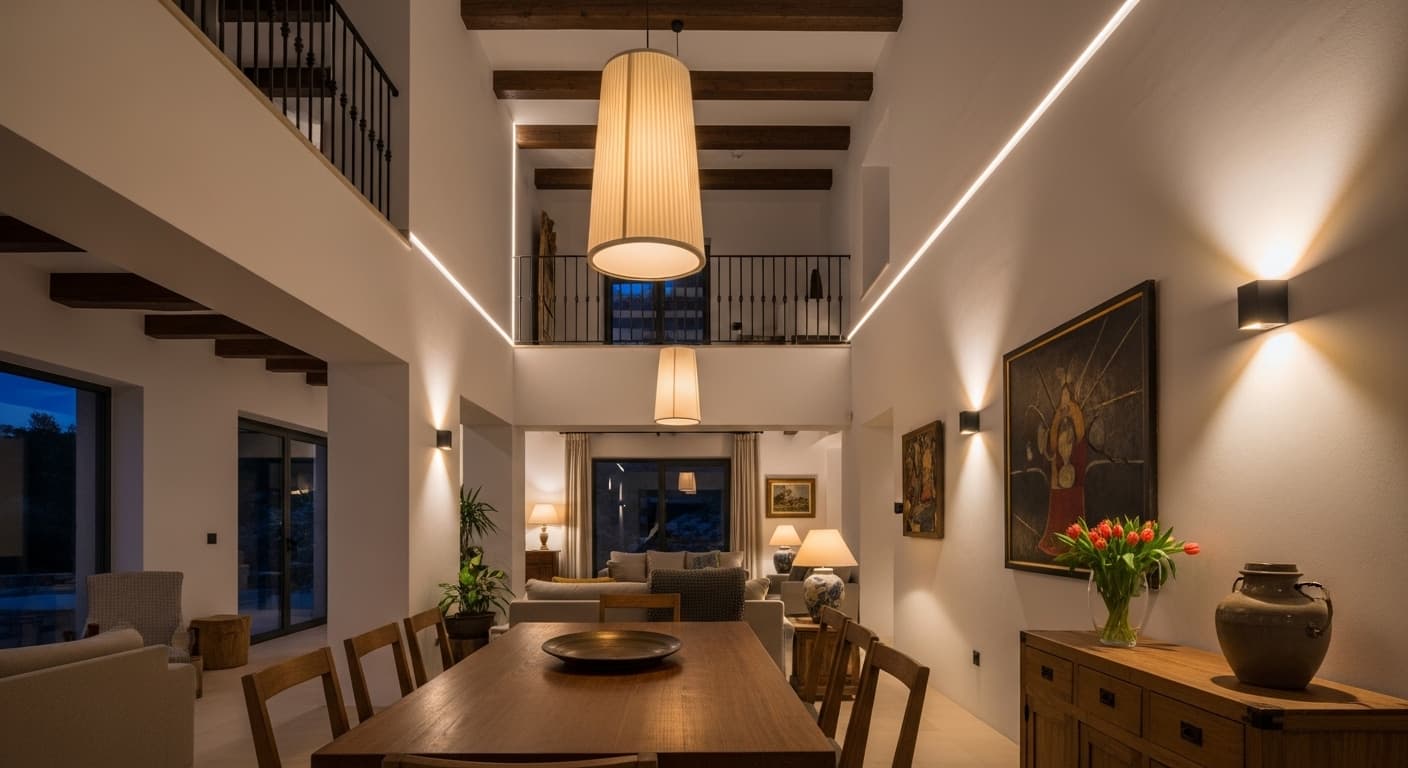
Ambient lighting provides the base layer of general illumination. In Mallorca, where daytime interiors are often very bright, the ambient lighting layer can be relatively subtle — warm, low-level light that takes over gently as daylight fades. Recessed ceiling fixtures, cove lighting, and indirect wall washers create a soft, even glow without competing with the natural light that dominates during the day.
Task lighting delivers focused illumination for specific activities: reading, cooking, working, grooming. Under-cabinet kitchen lights, desk lamps, and vanity lighting in bathrooms should provide bright, shadow-free light directed precisely where it is needed. In Mallorca's open-plan living spaces, adjustable task lighting allows you to create functional zones within a larger room without installing permanent partitions.
Accent lighting adds drama, highlights architectural features, and draws attention to artwork or decorative objects. In Mallorca, where stone walls, wooden beams, and textured surfaces are common interior elements, accent lighting can transform these features from background texture to focal points. Directional spotlights, picture lights, and concealed LED strips create shadows and highlights that reveal the character of materials in a way that flat, even lighting never can.
Colour Temperature: Matching Artificial Light to Mediterranean Warmth
One of the most common mistakes in Mallorcan interiors is installing artificial lighting that fights the warm character of the natural light. Cool white LEDs at 5000 or 6000 Kelvin look institutional and jarring in a space that has been bathed in warm golden sunlight all day. The transition from natural to artificial light should feel seamless and gentle.
I specify warm white light at 2700 to 3000 Kelvin for most residential spaces in Mallorca. This colour temperature harmonises with the warm tones of stone, terracotta, and wood that characterise Mediterranean interiors. For kitchens and bathrooms where colour accuracy matters, 3000 to 3500 Kelvin provides a neutral warmth that is both functional and flattering.
Tunable white systems, which allow you to adjust colour temperature throughout the day, are an excellent investment for Mallorca homes. Cooler, brighter light in the morning supports alertness and productivity; warmer, dimmer light in the evening promotes relaxation and sleep. This circadian approach to lighting aligns with the natural rhythms of Mediterranean life.
Outdoor Lighting: Terraces, Gardens, and Pool Areas
In Mallorca, outdoor living spaces are used as intensively as indoor rooms for much of the year, and they deserve equally thoughtful lighting design. A well-lit terrace extends the living day well into the warm Mediterranean evening, while poorly lit outdoor spaces feel abandoned the moment the sun sets.
Terrace Lighting
The key to terrace lighting is subtlety. Mallorca's clear night skies — especially away from Palma — are a natural asset that overly bright outdoor lighting destroys. Instead of floodlighting, create pools of warm light at seating and dining areas using low-level fixtures, pendant lights over tables, and recessed step lighting. Festoon lights strung across a terrace create an atmosphere that has become synonymous with Mediterranean evening entertaining.
Garden and Landscape Lighting
Landscape lighting in Mallorca should highlight the natural beauty of Mediterranean gardens: the sculptural forms of olive trees, the texture of stone walls, the shimmer of ornamental grasses. Uplighting mature trees from the base creates dramatic silhouettes against the night sky. Path lighting guides movement while adding warmth and safety. Avoid cold white fixtures and excessive brightness — the goal is to enhance the garden's existing character, not to illuminate it like a car park.
Pool Lighting
Pool lighting on Mallorca is both functional and decorative. Underwater LED fixtures in warm white create an inviting glow that extends the pool's visual presence into the evening. Perimeter lighting around the pool deck provides safety without glare. For infinity pools — common in Mallorca's hillside properties in Son Vida, Bendinat, and the Andratx coast — subtle edge lighting emphasises the vanishing horizon effect that makes these pools so compelling.
Energy-Efficient Lighting for Mediterranean Homes
Mallorca's commitment to sustainability and the practical reality of island energy costs make efficient lighting a priority. LED technology has advanced to the point where there is no aesthetic compromise in choosing energy-efficient fixtures — modern LEDs offer excellent colour rendering, dimming capability, and longevity that far exceeds traditional light sources.
In a typical Mallorcan villa, switching from halogen to LED throughout the property can reduce lighting energy consumption by 80 percent or more. Combined with smart controls that dim or switch off lights in unoccupied rooms, the savings are substantial. Solar-powered garden lighting is another obvious fit for an island that receives abundant sunshine — modern solar fixtures store enough energy during the day to provide reliable illumination throughout the evening.
Smart Lighting Systems
Smart lighting control has moved from luxury to mainstream, and it is particularly well-suited to Mallorcan homes where many properties serve as second residences or holiday homes that spend periods unoccupied. A smart system allows owners to control lighting remotely, simulate occupancy while away, and create lighting scenes that adapt to different activities and times of day.
Systems from manufacturers like Lutron, KNX-based solutions, and increasingly accessible options from consumer brands offer varying levels of sophistication. For a whole-house installation in a Mallorca villa, I typically recommend a professional-grade system that integrates with motorised blinds and climate control — allowing the house to respond holistically to changing light conditions throughout the day.
Pre-programmed scenes simplify daily life: a morning scene might open blinds, brighten task lighting in the kitchen, and set warm ambient light in hallways. An evening entertainment scene might dim indoor lighting, activate terrace fixtures, and illuminate the pool. A holiday scene might cycle through different lighting patterns to suggest occupancy. These scenes, once configured, operate at the touch of a button or entirely automatically based on time and daylight sensors.
Working with a Lighting Designer in Mallorca
While general interior designers address lighting as part of their overall design, complex projects benefit from a dedicated lighting designer who can model daylight conditions, calculate artificial lighting levels, and specify fixtures with the precision that high-end installations demand. On Mallorca, where the interplay between intense natural light and artificial illumination is particularly nuanced, specialist lighting expertise adds measurable value.
A lighting designer will typically produce a comprehensive lighting plan that includes fixture schedules, circuit layouts, control zone mapping, and photometric calculations that ensure every space receives appropriate illumination without waste or glare. This level of detail is especially important for properties in sensitive locations — historic buildings in Palma's Old Town, or hillside villas in Deià and Sóller where external light pollution must be minimised to comply with local regulations and respect the community.
The Intersection of Light and Material
Light does not exist in isolation — it reveals and transforms the materials it touches. In Mallorca, where interiors typically feature stone, wood, plaster, and ceramic, the relationship between light and surface is particularly rich. The same marès stone wall can appear pale and flat under fluorescent lighting or warm and deeply textured under carefully positioned spotlights. A polished concrete floor can feel cold and industrial or warm and luminous depending on whether it receives cool overhead light or warm, angled illumination.
This is why lighting design should never be treated as an afterthought in Mallorca. The material palette and the lighting scheme must be developed together, with each informing the other. Choose materials under the lighting conditions in which they will actually be seen — not under the artificial showroom lighting of a supplier, but in samples placed in the actual space at different times of day.
Conclusion: Light as the Foundation of Mallorcan Design
In Mallorca, light is not merely a practical requirement — it is the defining element of the living experience. The golden morning light that fills a bedroom in Pollença, the sharp midday sun that casts geometric shadows through shuttered windows in the Old Town, the molten amber of sunset over the Tramuntana seen from a terrace in Andratx — these are the moments that make living on this island extraordinary.
Designing with this light, rather than merely accommodating it, is what separates thoughtful interior design from decoration. It requires understanding orientation, respecting traditional solutions, embracing technology where it adds value, and always, always considering how a space will feel not just when the lights are on, but when the sun itself is the primary designer.