
Kitchen and Bathroom Design in Mallorca: Materials, Styles and Local Suppliers
Why Kitchen and Bathroom Design Matters More in Mallorca
When you live on an island where the light pours golden through every window and the air carries a trace of salt and pine, the rooms where you prepare food and take care of yourself become something more than utilitarian spaces. In Mallorca, kitchens and bathrooms sit at the intersection of Mediterranean lifestyle, local craftsmanship, and the practical demands of a climate that swings between blazing summers and damp winters. Getting the design right means balancing beauty with resilience, tradition with innovation, and global trends with deeply local sensibility.
Having designed kitchens and bathrooms across the island — from compact apartments in Santa Catalina to sprawling fincas near Andratx — I have seen first-hand how the right material choices, layout decisions, and supplier partnerships transform these rooms from afterthoughts into the heart of a home. This guide shares the insights I have gathered over years of practice on the island, so you can approach your own project with confidence.
Understanding the Mallorcan Climate and Its Impact on Material Selection
Before choosing a single tile or tap, you need to understand what the Mediterranean climate demands of interior materials. Mallorca's summers bring intense UV radiation, temperatures that regularly exceed 35 degrees Celsius, and humidity levels that fluctuate dramatically between the coast and the Tramuntana mountains. Winters are mild but wet, and condensation is a constant concern in bathrooms that lack proper ventilation.
These conditions rule out certain materials that perform well in northern Europe but deteriorate quickly here. Untreated mild steel, for example, corrodes within months in coastal properties in Portixol or Port d'Andratx. Certain natural stones absorb moisture and stain easily if not sealed correctly. On the other hand, Mallorca's climate rewards materials like local sandstone, high-fired ceramics, and marine-grade stainless steel — materials that have been tested by centuries of island life.
The key principle is simple: choose materials that the island's own building tradition has already validated, then update them with contemporary finishes and techniques. This approach gives you authenticity and durability in equal measure.
Kitchen Design Trends for Mallorca Homes
The Open Kitchen: Connecting Cooking and Living
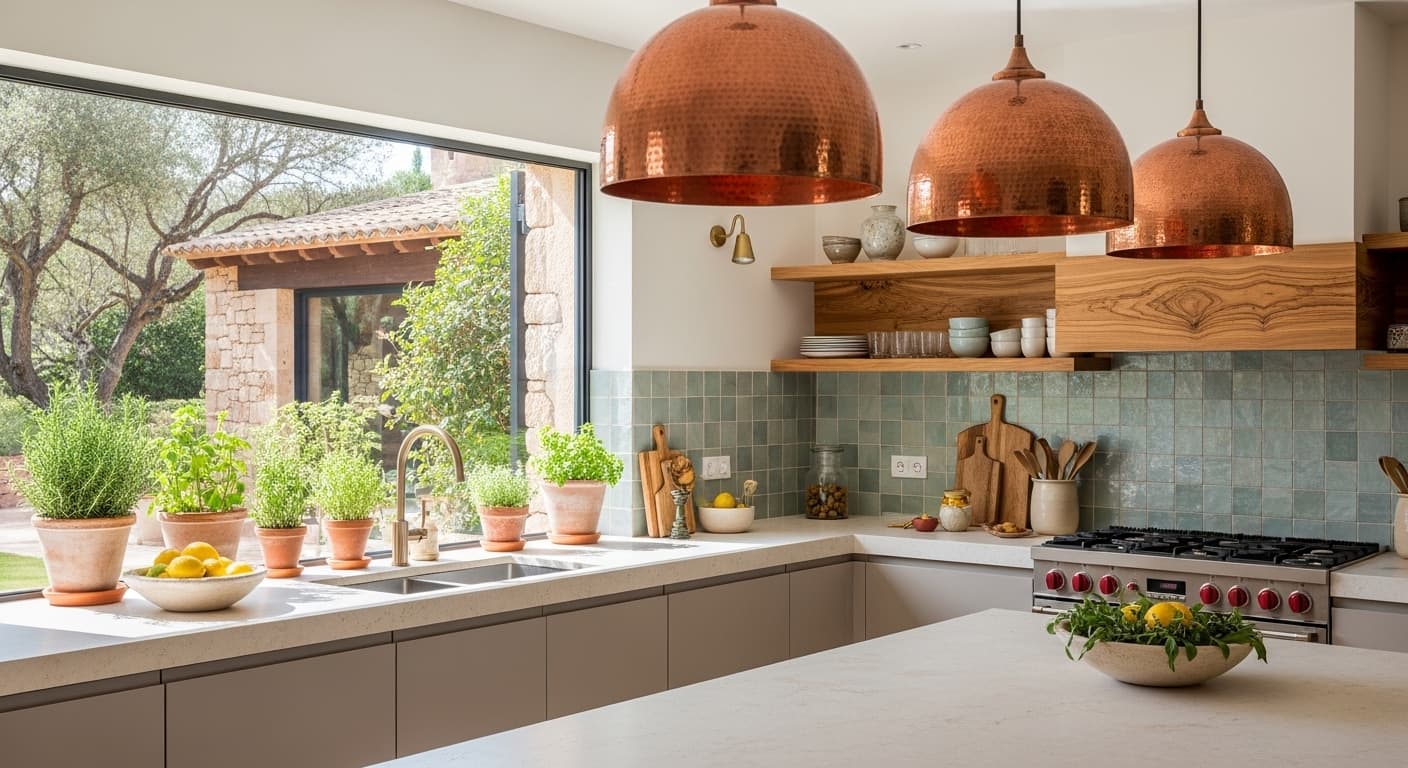
The open-plan kitchen has become the dominant layout in Mallorca's contemporary homes, and for good reason. Mediterranean life revolves around food, conversation, and gathering — activities that an enclosed kitchen separates rather than supports. In projects across Palma's Old Town, where I have converted traditional townhouses, removing the wall between kitchen and living area has consistently been the single change that clients value most.
An open kitchen works particularly well in Mallorca because it allows the cook to face the terrace, the garden, or the sea view rather than staring at a wall. The visual connection to the outdoors amplifies the sense of space and light that defines Mediterranean living. A generous island bench serves as the transition point between cooking zone and social zone, providing casual seating, additional prep surface, and a natural gathering spot for guests.
However, open kitchens demand thoughtful design to manage noise, odours, and visual clutter. A powerful, quiet extraction system is non-negotiable — I typically specify ceiling-integrated extractors or downdraft units that disappear when not in use. Storage must be ample and well-organized so that the kitchen reads as clean and composed when viewed from the living area. Handleless cabinetry in matte lacquer or natural wood veneer contributes to that seamless, uncluttered look.
The Semi-Open Kitchen: A Balanced Approach
Not every client wants a fully open kitchen, and that is a perfectly valid position. The semi-open layout uses a partial wall, a large sliding panel, or a glass partition to maintain a visual connection while containing cooking smells and noise. This approach works especially well in Mallorca's older properties, where thick stone walls carry structural and aesthetic significance. Rather than demolishing a wall entirely, you can create a generous pass-through opening that frames a view of the living space like a window.
The Outdoor Kitchen: Extending the Living Space
In Mallorca, the outdoor kitchen is not a luxury — it is a logical extension of how people actually live for eight months of the year. From simple barbecue setups to fully equipped outdoor cooking stations with sinks, refrigeration, and pizza ovens, the outdoor kitchen transforms terraces and gardens into functional entertaining spaces.
Designing an outdoor kitchen in Mallorca requires materials that withstand direct sun exposure, rain, and occasional winter frost. I recommend marine-grade stainless steel for appliances, natural stone or porcelain stoneware for countertops, and powder-coated aluminium for cabinetry frames. Porcelanosa's outdoor collections offer excellent options for worktops and cladding that resist UV degradation and thermal shock.
Position the outdoor kitchen to take advantage of prevailing breezes and to avoid smoke drifting toward seating areas. A covered pergola or retractable awning provides shade during summer and protection during light rain, extending the usable season well into November.
Local Stone and Tile: The Foundation of Mallorcan Kitchen Design
Marès Stone
Marès is the honey-coloured sandstone that defines Mallorca's architectural identity. Quarried on the island for centuries, it appears in everything from the Cathedral of Palma to humble farmhouse walls. In kitchen design, marès works beautifully as a feature wall, a range hood surround, or a backsplash in rustic-contemporary kitchens. It must be sealed with a breathable impregnating sealer to resist oil and moisture without trapping dampness inside the stone.
Mallorcan Ceramics
The island has a rich tradition of hand-painted ceramics, with workshops in Inca, Pòrtol, and Marratxí producing tiles that range from traditional geometric patterns to contemporary designs. Using locally made tiles in a kitchen backsplash or as decorative accents connects your home to the island's craft heritage while supporting local artisans. These tiles pair wonderfully with simple white cabinetry and natural wood, creating a look that is distinctly Mallorcan without being folkloristic.
Porcelain Stoneware and Large-Format Tiles
For clients who want a sleek, contemporary kitchen, large-format porcelain stoneware offers a seamless aesthetic with minimal grout lines. Brands like Porcelanosa produce slabs up to 320 by 160 centimetres that can clad countertops, backsplashes, and even cabinet fronts in a single material. These surfaces are non-porous, heat-resistant, and virtually maintenance-free — ideal qualities for a busy kitchen in Mallorca's warm climate.
Bathroom Design: Materials for the Mediterranean Climate
Choosing the Right Stone
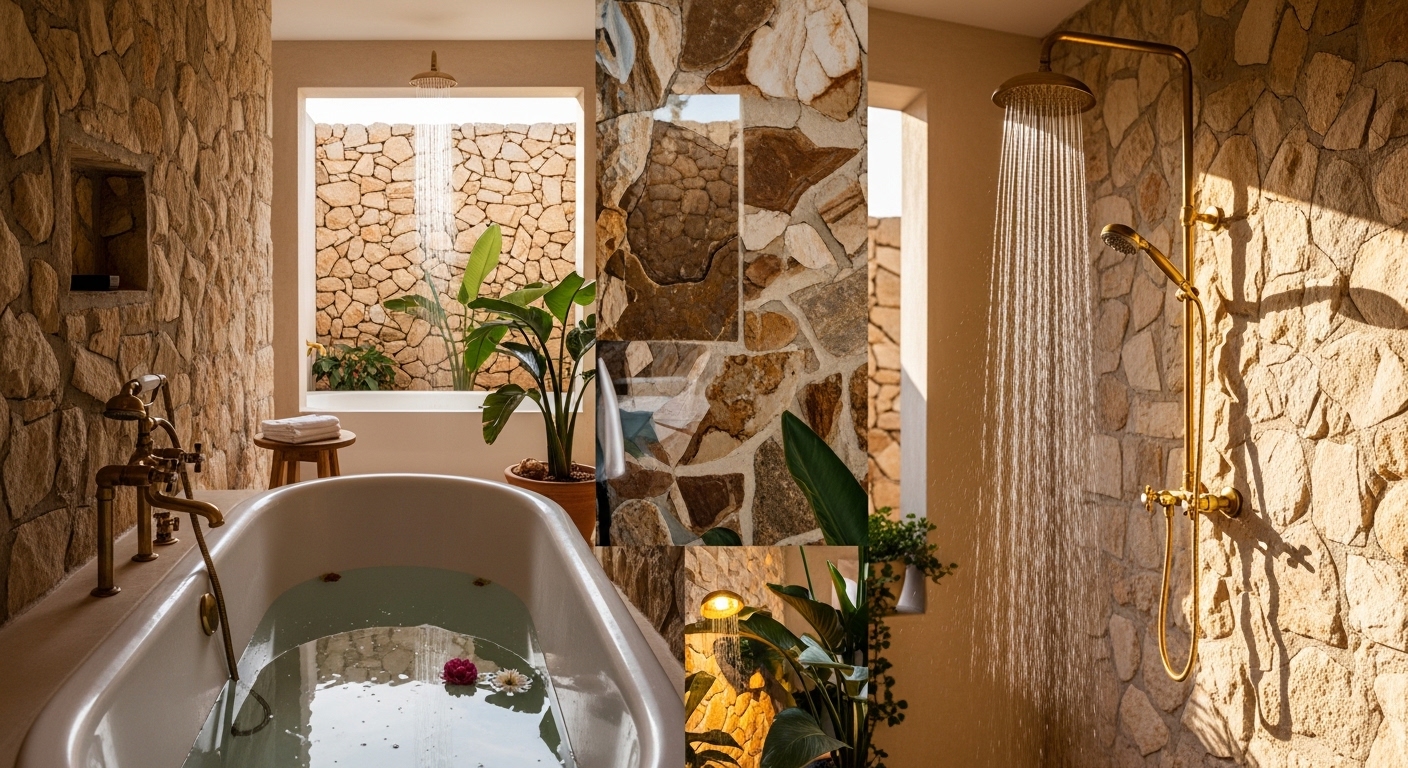
Natural stone in a Mallorcan bathroom requires careful selection. Marble, while beautiful, is porous and acidic-sensitive — it stains from cosmetics and etches from cleaning products unless maintained meticulously. For wet areas, I prefer limestone with a honed finish or, increasingly, sintered stone surfaces that replicate the look of natural marble with none of the maintenance concerns.
Travertine is another excellent option for bathrooms. Its warm, textured surface provides natural grip underfoot, and its earthy tones complement the Mediterranean palette perfectly. Fill the natural voids with epoxy for a smooth finish in shower areas, or leave them open for a more rustic texture on feature walls.
Cement Tiles and Hydraulic Tiles
Cement tiles — also known as hydraulic tiles — are experiencing a well-deserved revival. Originally produced across the Mediterranean in the nineteenth century, these handmade tiles feature bold geometric patterns in rich colours. They bring character and warmth to bathroom floors and walls, and several Mallorcan manufacturers produce them using traditional techniques. Note that cement tiles require sealing and periodic re-sealing, as they are porous by nature.
Water-Saving Fixtures: A Mallorcan Priority
Water scarcity is a genuine concern in Mallorca. The island's aquifers are under pressure, and summer droughts are becoming more frequent and severe. Responsible bathroom design must incorporate water-saving fixtures as a baseline, not an afterthought.
I specify low-flow showerheads that deliver a satisfying experience at six litres per minute or less, dual-flush toilets, and sensor-activated taps for guest bathrooms. Brands like Zucchetti and Dorn Bracht offer beautifully designed fixtures that integrate water-saving technology without compromising on aesthetics or performance. CEA Design's stainless steel taps combine minimalist form with exceptional durability and water efficiency — a favourite for contemporary bathrooms in our projects.
For toilets and sanitaryware, Flaminia and Catalano provide Italian-made pieces that balance elegant proportions with modern water-saving flush systems. Their rimless designs are also easier to clean, an important consideration in Mallorca's hard-water areas where limescale builds up quickly.
Brands We Trust: Supplier Recommendations
Porcelanosa
Spain's largest tile and bathroom manufacturer has a showroom in Palma and offers an enormous range of products, from budget-friendly basics to high-end architectural surfaces. Their KRION solid surface material is particularly versatile for bathroom vanities and kitchen worktops. The local team provides reliable delivery and technical support, which matters enormously when you are working to tight construction timelines on the island.
Zucchetti and Dorn Bracht
These two European tap manufacturers represent the pinnacle of bathroom fixture design. Zucchetti's range spans from minimalist to sculptural, while Dorn Bracht is renowned for its precision engineering and innovative shower systems. Both brands offer finishes that resist Mallorca's hard water, including brushed nickel, dark platinum, and matt black.
CEA Design
CEA's stainless steel fixtures are a natural fit for Mallorca's coastal properties. Stainless steel resists corrosion from salt air far better than chrome-plated brass, making these fixtures a sound long-term investment for homes in Portixol, Port de Sóller, or anywhere within a few hundred metres of the sea.
Flaminia and Catalano
Both Italian manufacturers produce sanitaryware that combines clean, contemporary lines with outstanding ceramic quality. Their wall-hung toilets and basins create a floating, minimal aesthetic that works beautifully in both compact Palma apartments and spacious villa bathrooms. Wall-hung installation also makes floor cleaning easier — a practical benefit that clients appreciate daily.
Local Ceramic Traditions and Contemporary Craft
Mallorca's ceramic tradition stretches back to the Moorish period, and the island still supports a network of workshops producing handmade tiles, pottery, and decorative pieces. The town of Pòrtol, just outside Palma, is the traditional centre of Mallorcan pottery, with several family workshops that have been active for generations.
Incorporating locally made ceramics into kitchen and bathroom design is more than an aesthetic choice — it supports the island's cultural economy and reduces the environmental footprint of your project by eliminating long-distance shipping. A single row of hand-painted Mallorcan tiles above a kitchen splashback or around a bathroom mirror can transform a space, adding colour, pattern, and a sense of place that mass-produced alternatives simply cannot replicate.
When working with local ceramics, plan ahead. Handmade tiles have longer lead times than factory products, and variations in colour and dimension are part of their charm but require a skilled installer who understands how to work with natural irregularity.
Kitchen Layouts: What Works in Mallorca
The L-Shape and Island
For medium to large kitchens, an L-shaped run of cabinetry with a freestanding island is the most versatile layout. It provides excellent workflow between sink, cooktop, and refrigerator, while the island adds prep space, storage, and casual seating. In Mallorca, orient the island so that the person cooking faces the terrace or garden — this connection to the outdoors elevates the cooking experience from a chore to a pleasure.
The Galley Kitchen
In Palma's Old Town apartments and narrow townhouses, the galley kitchen is often the only option. Two parallel runs of cabinetry maximise storage and counter space in a tight footprint. The key to making a galley kitchen feel generous rather than cramped is consistent materials, integrated appliances, and a light colour palette that bounces light between the two walls.
The Single Wall
In studio apartments and holiday rentals, a single wall of cabinetry conceals the entire kitchen behind uniform fronts. When closed, it reads as a piece of architecture rather than a kitchen. When open, it provides everything needed for meal preparation. This approach works exceptionally well in Mallorca's growing market for design-led holiday apartments in neighbourhoods like Santa Catalina and Portixol.
Practical Considerations for Mallorca Renovations
Renovating kitchens and bathrooms in Mallorca comes with logistical challenges that mainland projects rarely face. Shipping heavy materials to the island adds cost and lead time. Local tradespeople are in high demand, particularly between March and October when the construction season peaks. Planning permissions in historic areas like Palma's Old Town or the village of Valldemossa involve heritage restrictions that affect everything from window dimensions to external cladding materials.
Working with a local interior designer who understands these constraints saves time, money, and frustration. A designer who knows the island's supplier network can source materials efficiently, coordinate deliveries around ferry schedules, and navigate the permit process with confidence. This local knowledge is not a luxury — it is a practical necessity that protects your budget and your timeline.
Bringing It All Together
Designing a kitchen or bathroom in Mallorca is an opportunity to create spaces that honour the island's material traditions while meeting contemporary standards of comfort, efficiency, and style. The best results come from a considered approach: understanding the climate's demands, choosing materials with proven durability, working with trusted local and international brands, and designing layouts that celebrate the Mediterranean connection between indoor and outdoor living.
Whether you are renovating a townhouse in Palma, building a new villa in Son Vida, or updating a holiday apartment in Sóller, the principles remain the same. Start with the light, respect the materials, and design for the way people actually live in this extraordinary place. The kitchen and bathroom may be the most functional rooms in any home, but in Mallorca, they can also be the most beautiful.