
Interior Design Trends in Mallorca for 2026: What's Hot on the Island
Why Mallorca's Design Trends Are Different
Interior design trend forecasts tend to be written from the perspective of major urban centres—Milan, London, New York, Copenhagen. While these cities undeniably set the pace for global design, the trends that matter on Mallorca are shaped by a fundamentally different set of conditions. Here, the Mediterranean climate, the quality of natural light, the availability of local materials, and the specific lifestyle that the island encourages all act as powerful filters. Some global trends translate beautifully to the island context; others are entirely irrelevant. And some of the most exciting developments in Mallorcan interiors have no equivalent in the trend reports emerging from mainland studios.
As a designer who has practised on the island for over a decade, I observe trends not through trade publications but through the projects that cross my desk, the conversations I have with clients, the materials that local suppliers are developing, and the shifting priorities of homeowners who are increasingly thoughtful about how they want to live. What follows is my assessment of the design movements that are genuinely shaping Mallorca's interiors in 2026.
Biophilic Design in the Mediterranean Climate
Biophilic design—the practice of incorporating nature and natural elements into the built environment—has been a global trend for several years. But on Mallorca, it takes on a character that is distinctly different from what you might see in a London office building or a Singapore residential tower. Here, the connection to nature is not aspirational; it is the baseline condition.
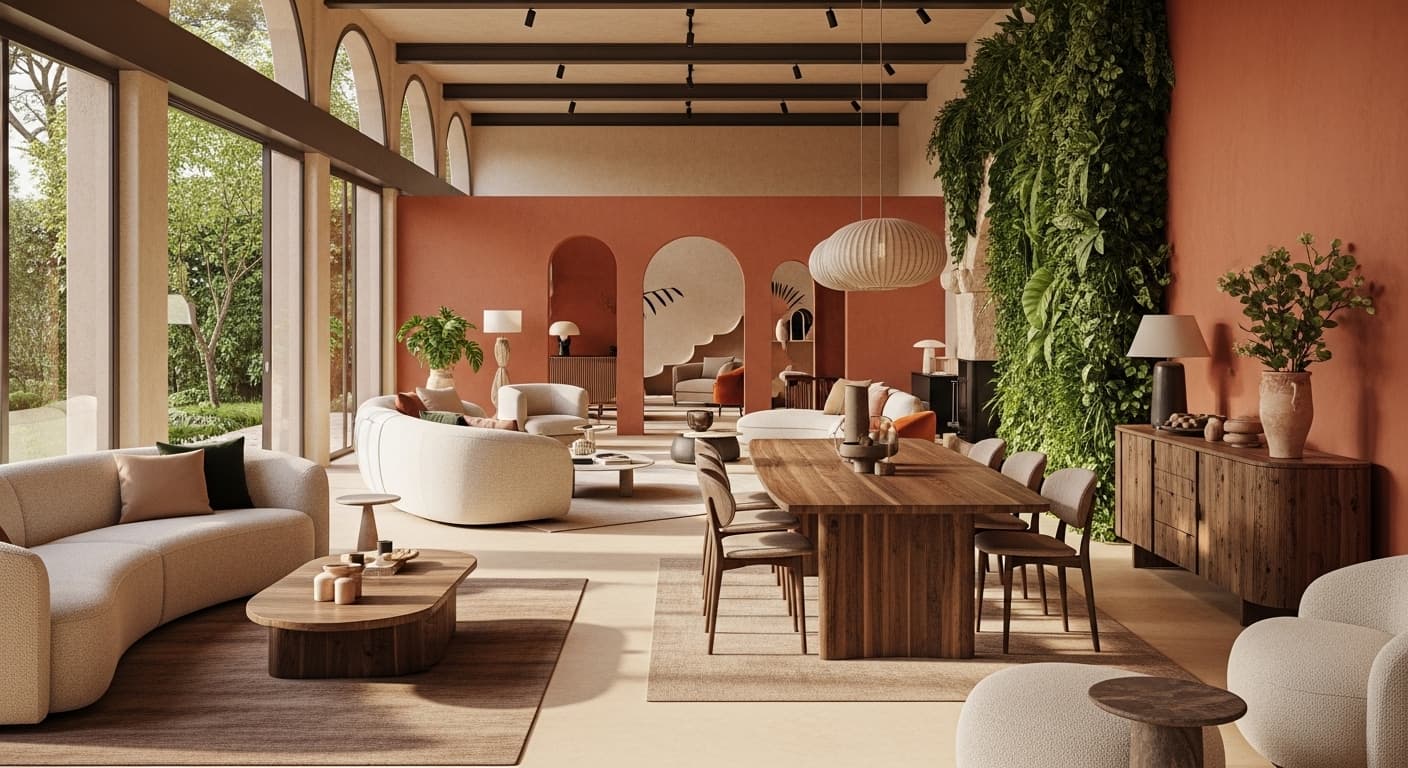
The 2026 iteration of biophilic design on the island moves beyond the now-familiar living walls and potted plants to embrace what I call "landscape integration." This means designing interiors that actively engage with the specific ecosystem outside the window. In a Deià hillside property, this might involve framing views of ancient olive terraces through carefully proportioned openings, and selecting interior materials—stone, wood, textile—that echo the colours and textures visible in the landscape. In a Portixol seafront apartment, it means using a colour palette drawn from the harbour—weathered blue, salt-bleached timber, oxidised metal—and materials that can withstand the salt air while connecting the interior to the maritime environment.
Water features are becoming increasingly sophisticated. Rather than decorative fountains, we are seeing reflection pools integrated into courtyard designs, shallow water channels that run through transitional spaces between indoors and outdoors, and indoor water walls that provide humidity and acoustic masking in properties where the sealed building envelope creates an artificially dry interior environment. These features draw directly from the Moorish architectural heritage of the Balearics, where water was used not just for irrigation but as a sensory and spiritual element.
The planting palette is shifting too. Clients are moving away from the imported tropical species that dominated Mallorca's luxury gardens for decades and toward native Mediterranean planting: carob trees, lentisk, rosemary, lavender, dwarf fan palms, and the endemic Balearic plants that thrive without irrigation. This represents both an ecological awakening and an aesthetic one—native plantings create a more harmonious relationship between garden and landscape than curated collections of exotic specimens.
Warm Minimalism Meets Mallorcan Rustic
The tension between the clean lines of contemporary minimalism and the rough-hewn character of traditional Mallorcan architecture has been a productive creative force for years. In 2026, this dialogue has reached a new level of sophistication that I find genuinely exciting.
The approach I am seeing most frequently—and advocating in my own projects—involves stripping interiors back to their essential architectural bones: exposed stone walls, timber beam ceilings, terracotta floors. These elements are then complemented, not competed with, by contemporary furnishings in neutral tones, clean-lined joinery, and carefully curated lighting. The result is spaces that feel both ancient and contemporary, warm and uncluttered, characterful and calm.
A critical distinction of this trend on Mallorca is the rejection of the all-white palette that has dominated Mediterranean interiors for the past decade. White walls remain a foundation, but they are increasingly supplemented by warm neutrals—linen, sand, putty, stone—that reflect the earth tones of the Mallorcan landscape. In Santa Catalina apartments, I am specifying warm plaster finishes in subtle taupes and creams rather than the clinical white that was standard even two years ago. In rural fincas near Pollença and Sóller, the trend is toward leaving stone walls in their natural state—warm honey marès or cool grey limestone—rather than rendering and painting them white.
Furniture selections reflect this same sensibility. The heavy, dark-wood antiques that once filled Mallorcan country houses are being replaced by lighter pieces in natural materials—cane, rattan, pale oak, whitewashed pine—that occupy space more gently. Statement pieces tend to be artisanal rather than designer-label: a hand-thrown ceramic table lamp, an olive-wood bench, a woven textile hanging from a local weaver.
Curved Architecture in New Builds
The straight-line, box-form architecture that has dominated Mallorca's luxury new-build sector for the past 15 years is beginning to soften. A new generation of architects working on the island—drawing inspiration from the organic forms of the Mediterranean vernacular as well as from international practitioners like Oscar Niemeyer, Tadao Ando, and Álvaro Siza—is introducing curves, arches, and organic geometries into contemporary residential design.
This is not merely a stylistic shift; it is a functional one. Curved walls create more fluid circulation patterns and softer acoustic environments. Arched openings—reinterpreted from the traditional Mallorcan portal—frame views and create visual rhythm within an interior. Vaulted ceilings, whether in new construction or revealed during renovation of historic properties, add volume and a sense of enclosure that flat ceilings cannot achieve.
In the projects crossing my desk, I am seeing curved elements appearing in multiple forms: sinuous partition walls that guide movement through open-plan spaces, rounded kitchen islands that soften the hard geometry of appliances and storage, arched niches that provide display or storage space within thick walls, and organically shaped swimming pools that sit more naturally in the landscape than the rectangular pools that have been standard for decades.
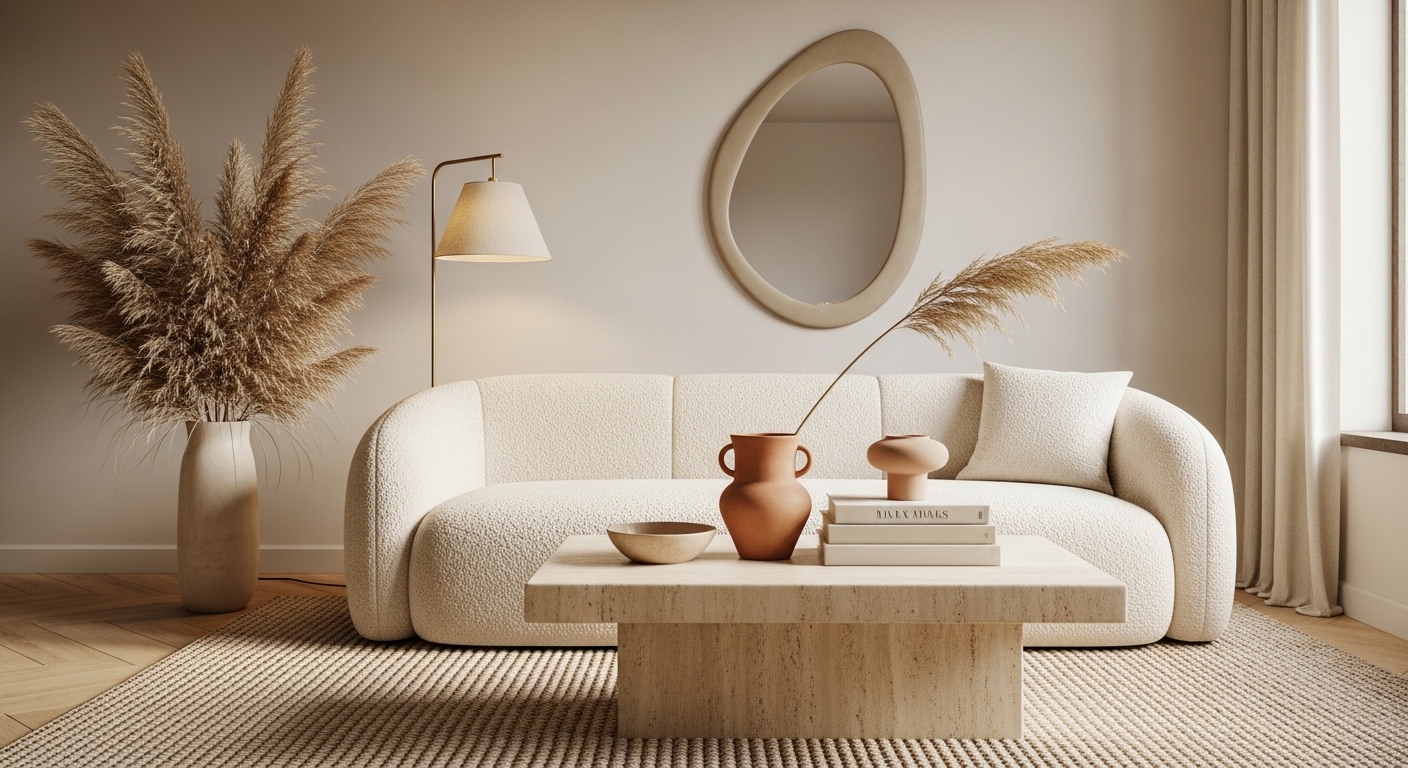
From a furnishing perspective, this trend favours pieces with soft, rounded profiles: curved sofas, round dining tables, oval mirrors, and sculptural lighting fixtures with organic forms. The overall effect is interiors that feel less rigid and more human—spaces that invite lingering rather than merely passing through.
Sustainable Local Materials: From Trend to Standard
Sustainability in interior design has evolved from a niche concern to a mainstream expectation, and on Mallorca this evolution has a particularly powerful local dimension. The island's building materials—marès stone, terracotta, locally grown timber—are inherently sustainable: they are extracted and produced locally, they have low embodied energy, and they biodegrade naturally at end of life. Using them is not just an environmental choice; it is a cultural and aesthetic one.
The 2026 development in this area is a growing sophistication in how sustainable materials are specified and sourced. Clients are asking not just "is this material local?" but "which quarry does this stone come from?" and "was this timber harvested sustainably?" This level of material traceability—common in the food industry for years—is becoming a standard expectation in high-end interior design on the island.
I am also seeing growing interest in salvaged and reclaimed materials. Antique terracotta tiles recovered from demolished buildings are in high demand for their colour depth and patina. Reclaimed timber beams from old agricultural structures are being repurposed as mantels, shelving, and furniture. Old doors, shutters, and ironwork are being restored and reintegrated into new projects. This approach is simultaneously sustainable, cost-effective for materials with genuine historical value, and aesthetically rich.
New materials are entering the Mallorcan market too. Cork—produced from the bark of cork oaks that grow in the Tramuntana mountains—is being used for flooring, wall panels, and even furniture. Hempcrete (a composite of hemp fibre and lime) is appearing in eco-conscious new builds as a breathable, carbon-negative wall material. And rammed earth construction, while still rare, is generating increasing interest among clients who want to build with the most elemental and sustainable material available: the ground beneath their feet.
Smart Home Integration in Traditional Properties
The intersection of heritage architecture and modern technology is one of the most fascinating design challenges on Mallorca. How do you install a comprehensive smart home system in a 300-year-old finca with metre-thick stone walls? How do you integrate invisible speakers, motorised shading, and climate control into a restored Old Town Palma townhouse without compromising its historical integrity?
In 2026, the answers are becoming more elegant. Wireless smart home protocols (Matter, Thread, Wi-Fi 7) have matured to the point where they can operate reliably through traditional construction materials that would have blocked earlier wireless systems. This means fewer cables, less wall chasing, and less disruption to historic fabric.
The integration points I am specifying most frequently include: automated Mallorcan shutters (persianas) that respond to sun position and interior temperature; lighting scenes that adjust colour temperature throughout the day to complement the natural light cycle; invisible speaker systems built into ceilings or walls that provide ambient music without visible hardware; and climate control systems that use the thermal mass of stone walls as part of their heating and cooling strategy rather than fighting against it.
The key principle guiding all smart home integration in heritage properties is invisibility. The technology should enhance the living experience without announcing its presence. No visible control panels, no blinking LEDs, no industrial-looking sensors. When done well, a guest should be able to enjoy perfect comfort and ambience without ever realising that sophisticated technology is orchestrating the experience.
Colour Trends Influenced by the Island Palette
Every year, the global colour authorities—Pantone, the various paint manufacturers—announce their colours of the year. And every year, I observe that these predictions have limited relevance to Mallorca, where the colour conversation is driven by the landscape rather than by corporate marketing departments.
That said, the colours I am using most in 2026 projects align with a broader shift away from cool greys and stark whites toward warmer, earthier tones. The palette I am working with draws directly from the Mallorcan landscape:
- Terracotta warmth: Not the bright orange of a new tile, but the deep, complex red-brown of a centuries-old floor. This colour is appearing on feature walls, in kitchen cabinetry, and as an accent in bathrooms.
- Olive and sage greens: The silvery green of olive foliage and the muted sage of garrigue herbs are among the most requested colours for kitchen cabinetry and bedroom walls. These greens feel inherently Mediterranean and work beautifully with the warm neutrals that form most interiors' base palette.
- Sea-washed blues: Not the bright Mediterranean blue of a swimming pool, but the complex, desaturated blues of deep water, weathered fishing boats, and salt-faded shutters. These colours bring a coastal character to interiors without veering into nautical cliché.
- Warm stone neutrals: The colours of Mallorca's geological palette—marès gold, limestone grey, sandstone cream—serve as sophisticated alternatives to standard white and beige.
- Charcoal and iron: Dark accents drawn from the colour of wrought-iron balconies and volcanic stone provide grounding contrast in otherwise light-toned interiors.
Outdoor Living Rooms: The New Standard
If the pandemic accelerated any single trend in Mallorcan interior design, it was the elevation of outdoor spaces from afterthought to priority. In 2026, the outdoor living room is no longer a luxury feature; it is a baseline expectation for any property of substance on the island.
What distinguishes the 2026 iteration from earlier outdoor living concepts is the level of finish and furnishing. Outdoor spaces are now designed with the same level of detail as interior rooms. This means permanent built-in seating with high-quality cushions in weather-resistant fabrics, outdoor kitchens with professional-grade appliances, dining areas with solid tables and comfortable chairs (not the flimsy folding furniture of a decade ago), integrated lighting that creates ambience after dark, and audio systems that provide background music without disturbing neighbours.
In the Andratx villas and Son Vida properties I have worked on recently, the outdoor living areas typically include a covered lounge area (protected from sun and occasional rain by a retractable pergola or permanent roof structure), a dining area that seats 8-12 comfortably, a pool terrace with day beds and shade structures, and a separate zone for barbecue or outdoor cooking. The total area of these outdoor spaces often equals or exceeds the indoor living space.
The material palette for outdoor spaces is evolving too. Polished concrete and natural stone are replacing the ceramic tiles that were standard for decades. Outdoor rugs in weather-resistant materials define seating areas and add warmth underfoot. Planters are increasingly integrated into the architecture rather than placed as afterthoughts, with built-in irrigation and lighting that transform them into living sculptures after dark.
The Artisan Revival
Perhaps the most significant trend in Mallorcan interior design in 2026 is not a specific aesthetic or material choice but a broader cultural shift: the revival of artisanal production and the growing demand for handmade, locally produced objects in the home.
This movement has deep roots in Mallorca's craft heritage. The island has long traditions of ceramics (siurells, the distinctive white clay whistles, and the painted pottery of Pòrtol), textile weaving (roba de llengües and the tela de lenguas tradition), ironwork (the elaborate balcony railings of Palma's old quarter), glassblowing (Gordiola, active since 1719), and woodworking (the distinctive olive-wood implements found in every Mallorcan kitchen).
What is new in 2026 is the scale of demand and the sophistication of the dialogue between designers and makers. A new generation of artisans—many of them young, many trained off-island and returned with fresh perspectives—is producing work that honours traditional techniques while embracing contemporary aesthetics. Hand-thrown ceramic tableware in muted earth tones, hand-woven linen curtains in natural colours, hand-forged iron lighting fixtures with clean modern lines, hand-turned olive-wood objects that bridge art and function.
For designers, working with artisans adds time and complexity to projects—custom pieces require lead times of weeks or months rather than the days of catalogue ordering. But the result is interiors with genuine authenticity: each piece is unique, carries the marks of human hands, and connects the home to the community and traditions of the island where it stands.
The most enduring interiors are those that resist the pull of global uniformity and instead draw their identity from the specific place where they exist. In 2026, the best Mallorcan homes are doing exactly this—embracing the island's light, materials, craftsmanship, and way of life to create spaces that could exist nowhere else.
How to Incorporate These Trends in Your Mallorca Home
Trends are tools, not rules. The value of understanding what is happening in Mallorcan design is not to follow every movement slavishly but to identify the ideas that resonate with your own taste and lifestyle. A single well-chosen artisan piece, a thoughtful colour shift, a better integration of indoor and outdoor spaces—these targeted interventions can transform a home more effectively than a complete redesign.
If you are interested in exploring how any of these trends might enhance your Mallorca property, I welcome the conversation. Every home is different, every client's needs are unique, and the most rewarding design outcomes emerge from a genuine dialogue between designer, client, and place.