
Interior Design in Mallorca: The Complete Guide to Creating Your Dream Home
Why Mallorca Is Unique for Interior Design
Mallorca is not just another Mediterranean island. It is a place where centuries of cultural exchange between Moors, Catalans, and mainland Spaniards have created an architectural heritage unlike anywhere else in Europe. When you set out to design a home here, you are not simply decorating rooms; you are entering a dialogue with history, landscape, and light that demands a thoughtful, place-specific approach to interior design in Mallorca.
The island attracts an international community of homeowners who arrive with diverse tastes, from Scandinavian minimalism to Milanese sophistication. Yet the most successful interiors are those that honor the Mallorcan context. A restored finca in the Tramuntana foothills calls for a different palette and materiality than a penthouse overlooking the marina in Palma's Old Town. Understanding this tension between personal style and local character is the first step toward creating a home that truly belongs here.
Unlike mainland Spanish cities, Mallorca benefits from a contained ecosystem of suppliers, craftspeople, and architects who frequently collaborate. This proximity means an interior designer in Mallorca can coordinate bespoke cabinetry, artisan tilework, and structural engineering within a single network, reducing lead times and communication gaps that plague projects in larger markets.
The Mediterranean Material Palette
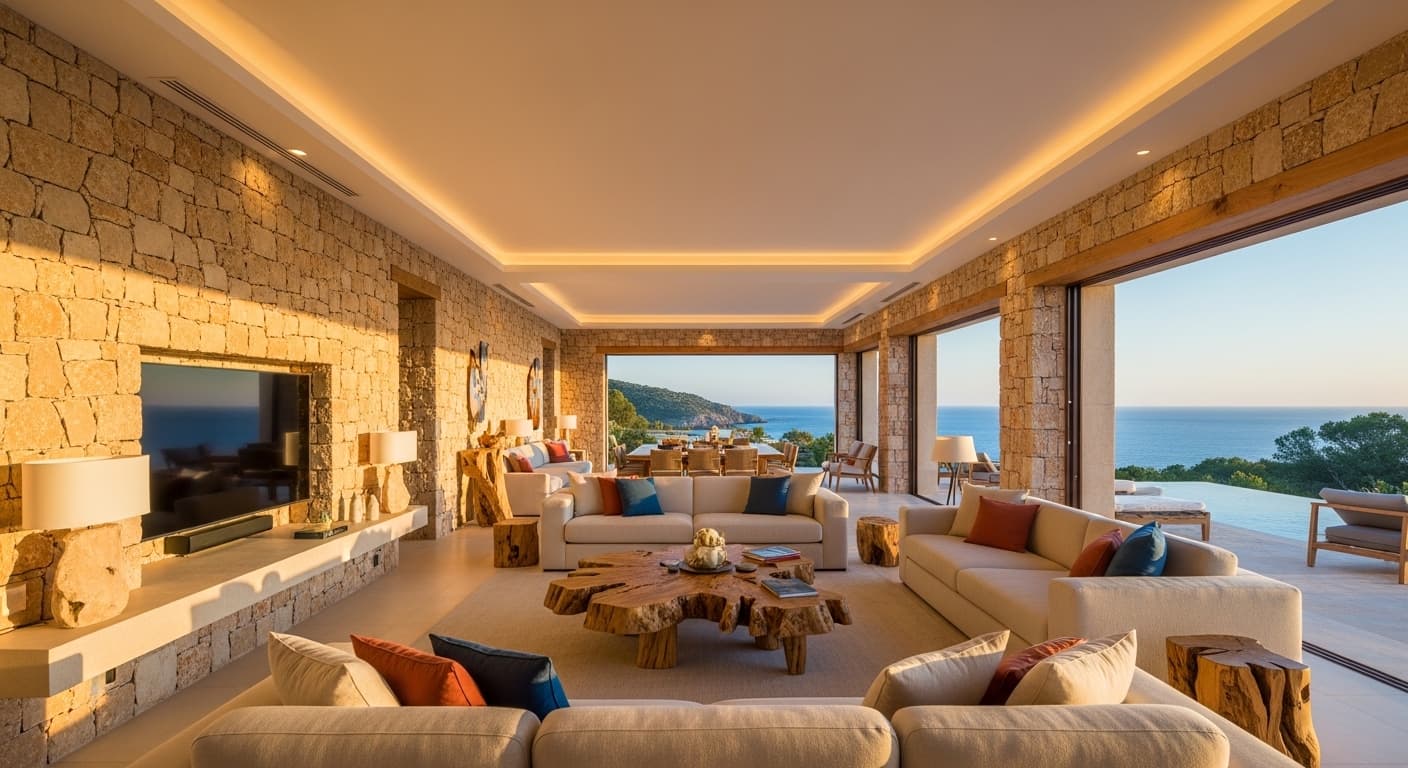
Materials are the vocabulary of any interior, and in Mallorca, the local vocabulary is exceptionally rich. The island's sandstone, known locally as marès, has been quarried for centuries. Its warm, honey-gold tone appears in everything from cathedral walls to farmhouse kitchens. Using marès as an interior accent wall or fireplace surround immediately roots a space in its Mallorcan context.
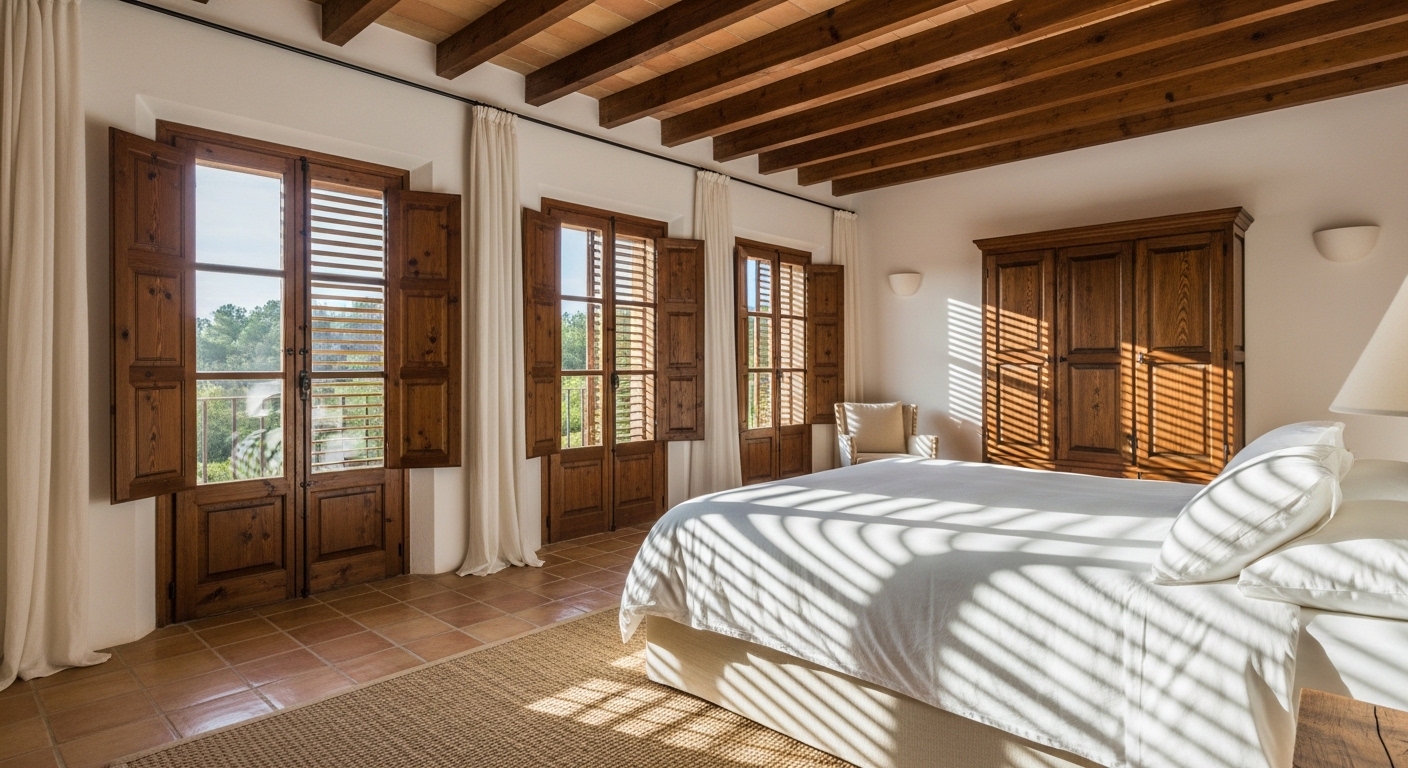
Terracotta floor tiles, often hand-fired in local workshops, bring warmth and texture underfoot. Their slight irregularity is a feature, not a flaw: each tile absorbs and releases heat differently, keeping interiors cool in summer and warm in winter. Pair these with lime-washed walls for a finish that breathes, regulates humidity, and develops a gentle patina over time.
Olive wood is another island staple. Sourced from groves that are periodically pruned or replanted, it is both sustainable and deeply characterful. Olive wood makes stunning dining tables, shelving, and decorative bowls, each piece carrying the twisted, organic grain of a tree that may have lived for hundreds of years.
Natural linen and cotton textiles in neutral tones complete the base palette. These fabrics drape beautifully in Mallorca's gentle breezes and age gracefully in the strong island light. For upholstery, look for outdoor-grade linens that resist UV fading, a practical consideration given the 300 days of sunshine the island enjoys each year.
Working with Local Artisans
One of the greatest advantages of commissioning interior design in Mallorca is access to an extraordinary community of artisans. The island has attracted skilled craftspeople from across Europe who have established workshops in converted farmhouses, industrial estates, and the narrow streets of Palma's artisan quarter.
Blacksmiths in the inland towns of Inca and Sineu create hand-forged ironwork for balustrades, lighting fixtures, and furniture legs. Their work carries a tactile quality that mass-produced alternatives simply cannot match. A single custom chandelier from a Mallorcan forge becomes the centrepiece of a dining room and a conversation starter for decades.
Ceramic artists on the island produce everything from hand-painted Mallorcan tiles in traditional geometric patterns to contemporary stoneware in muted, earthy glazes. Incorporating these pieces into a bathroom or kitchen splashback adds layers of craftsmanship that elevate the entire project.
Upholsterers and textile artisans work with ikat fabrics known as roba de llengües, a traditional Mallorcan textile with flame-like patterns that dates back to Moorish times. Using these textiles for cushions, headboards, or framed wall art is a subtle way to honour the island's heritage without resorting to pastiche.
Engaging local artisans requires patience and relationship-building. Lead times can be longer than factory orders, and communication may happen over coffee rather than email. A good interior designer in Mallorca will have established relationships with trusted makers and can manage expectations around timelines, costs, and the inherent variability of handmade work.
Key Neighborhoods and Their Design Character
Old Town Palma
The historic centre of Palma is a labyrinth of medieval streets, Renaissance courtyards, and Baroque churches. Apartments here often feature double-height ceilings, exposed stone walls, and original floor tiles in geometric patterns. The design challenge is to introduce modern comfort, effective climate control, and contemporary kitchens and bathrooms without erasing the layers of history that make these spaces so compelling. Restraint is key: let the architecture speak, and complement it with carefully chosen furniture and lighting.
Santa Catalina
Once a fishermen's quarter, Santa Catalina has evolved into Palma's most vibrant neighborhood, full of restaurants, galleries, and independent shops. The apartments tend to be smaller, with lower ceilings and compact floor plans. Clever spatial design is essential here: built-in storage, multifunctional furniture, and a light, airy palette that maximizes the sense of space. The neighborhood's eclectic energy invites a more playful, contemporary approach to interiors.
Son Vida
Perched on a hillside above Palma, Son Vida is the island's most exclusive residential enclave. Villas here are large, often with pools, gardens, and sweeping views of the bay. The design language tends toward understated luxury: high-quality natural stone, bespoke joinery, integrated home automation, and expansive indoor-outdoor living spaces. Privacy and security are important considerations, as are the logistics of furnishing large properties where a single room may require dozens of individual specifications.
Portixol
This former fishing village on Palma's eastern waterfront has become a sought-after address for those who want seaside living within walking distance of the city. Portixol properties range from compact apartments to converted fishermen's cottages. The maritime setting calls for a relaxed, coastal aesthetic with durable materials that can handle salt air and sandy feet. Blues, whites, and natural textures dominate, but the best Portixol interiors avoid cliché by incorporating unexpected contemporary elements.
Deià and Sóller
The Tramuntana mountain villages of Deià and Sóller attract artists, writers, and nature lovers. Properties here include traditional stone houses with thick walls, small windows, and terraced gardens. Interior design in these settings should embrace the cocooning quality of thick stone walls while introducing enough light and airflow to prevent spaces from feeling dark or damp. Natural wood beams, whitewashed walls, and handwoven textiles create interiors that feel both rustic and refined.
Andratx and Port d'Andratx
The southwestern corner of the island is known for dramatic coastal scenery and a sophisticated international community. Villas in Andratx often feature floor-to-ceiling glazing that frames views of the sea and the pine-clad hillsides. The architecture is frequently modern, calling for a design approach that balances clean lines with warmth. Natural materials, statement art pieces, and carefully considered lighting prevent minimalist spaces from feeling sterile.
How Light and Climate Shape Design Choices
Mallorca receives an average of 2,750 hours of sunshine per year, making light one of the most powerful design tools at your disposal. South-facing rooms are flooded with warm, golden light from morning to evening, which means cooler tones on walls and fabrics can balance the warmth without making spaces feel cold. North-facing rooms, on the other hand, benefit from warmer tones and layered artificial lighting to compensate for softer natural light.
The intensity of Mallorcan light also affects material choices. High-gloss surfaces can create uncomfortable glare, so matte and textured finishes are generally preferred. Lime-washed walls scatter light beautifully, creating a soft, diffused glow that changes character throughout the day. This is one reason why traditional Mallorcan interiors feel so alive: the surfaces interact dynamically with the sun's movement.
Summer temperatures regularly exceed 35 degrees Celsius, and while air conditioning is increasingly common, thoughtful design can reduce reliance on mechanical cooling. Cross-ventilation, thermal mass from stone walls, external shutters and awnings, and strategic planting all contribute to passive cooling. An experienced interior designer in Mallorca will work with these passive strategies rather than treating them as obstacles to overcome.
Winter in Mallorca is mild but damp, and older properties in particular can suffer from condensation and mould if not properly ventilated. Breathable wall finishes, underfloor heating, and dehumidification systems should be considered during the design phase rather than retrofitted later.
Budget Considerations for Interior Design in Mallorca
Budgeting for an interior design project in Mallorca requires an understanding of local market conditions that differ significantly from mainland Europe. Labour costs are generally lower than in northern European cities, but material costs can be higher due to the logistics of shipping goods to an island. Anything that cannot be sourced locally must arrive by sea or air, adding both cost and lead time.
As a general guideline, a mid-range full interior design project in Mallorca, including furniture, fixtures, and finishes but excluding structural work, typically costs between 500 and 1,200 euros per square metre. High-end projects with bespoke elements, premium materials, and smart home integration can easily reach 2,000 euros per square metre or more.
Designer fees vary. Some charge a flat project fee, others work on a percentage of the total project cost (typically 10 to 15 percent), and some bill hourly. Ensure you understand the fee structure before engaging an interior designer in Mallorca, and clarify what is included: does the fee cover procurement, site visits, contractor coordination, and styling, or are these additional charges?
Contingency is critical. For renovation projects, a contingency of 15 to 20 percent is prudent, as older Mallorcan properties frequently reveal unexpected structural or plumbing issues once work begins. For new builds or properties in good structural condition, 10 percent is usually sufficient.
Typical Project Timelines
Time is one of the most underestimated variables in Mallorcan interior design projects. The relaxed pace of island life extends to the construction and design industries, where timelines are influenced by seasonal demand, artisan schedules, and shipping logistics.
A straightforward interior design project for a well-maintained apartment, involving new furniture, lighting, and soft furnishings but no construction work, typically takes three to five months from initial consultation to completion. This includes a design development phase of four to six weeks, a procurement phase of six to ten weeks (longer for custom or imported pieces), and an installation phase of two to four weeks.
Projects involving renovation work add significant time. A full renovation of a Mallorcan townhouse or finca, including structural modifications, new bathrooms and kitchen, and complete interior design, should be planned over eight to fourteen months. Permitting alone can take two to four months, depending on the property's heritage classification and the municipality.
Seasonal factors also play a role. The construction industry in Mallorca is busiest from March to October, when demand from both residents and holiday homeowners peaks. Starting a project in autumn or winter can sometimes yield faster contractor availability and better pricing, though some outdoor work may be weather-dependent.
The best interior design projects in Mallorca are not rushed. They respect the island's pace, its materials, and its light. The result is a home that does not just look beautiful but feels inevitable, as if it could not exist anywhere else.
Finding Your Vision: The Design Process
Every successful interior design project begins with a clear understanding of how you live and what you value. Before choosing a single fabric swatch, sit in your Mallorcan home at different times of day. Notice where the light falls in the morning, where you naturally gravitate for coffee, and which views you want to frame or screen.
A good interior designer in Mallorca will spend time in your space before presenting any ideas. They will ask about your daily routines, your entertaining style, whether you have children or pets, and how you use the property, whether as a primary residence, a holiday home, or a rental investment. These practical considerations shape spatial planning, material durability, and the level of maintenance your interiors will require.
The design process typically moves through distinct phases. A concept phase establishes the overall direction: mood boards, material samples, and preliminary floor plans. A development phase refines the concept into detailed specifications, elevations, and a comprehensive schedule of finishes. A procurement phase sources and orders all items. An installation phase brings everything together on site.
Throughout this process, communication is paramount. Ensure your designer provides regular updates, presents options rather than fait accompli, and is transparent about costs and timelines. The best designer-client relationships are collaborative partnerships built on trust, clarity, and shared enthusiasm for creating something exceptional.
Sustainability and Responsible Design
Mallorca is increasingly conscious of environmental sustainability, and interior design is no exception. The island's water scarcity, waste management challenges, and fragile natural ecosystems make responsible design choices particularly relevant here.
Choosing locally sourced materials reduces the carbon footprint of transportation while supporting the island's economy. Specifying reclaimed or recycled materials, such as antique floor tiles salvaged from demolished buildings, adds both character and environmental credibility. Low-VOC paints and finishes improve indoor air quality and are better for the craftspeople who apply them.
Energy-efficient lighting, high-performance insulation, and smart home systems that optimize heating, cooling, and water use are investments that pay dividends in both environmental impact and running costs. For holiday properties, automated systems that reduce energy consumption during unoccupied periods make particular sense.
Sustainable design is not a compromise. It is a mark of quality and foresight that adds long-term value to your Mallorcan property while respecting the island that makes it special.
Final Thoughts
Interior design in Mallorca is a privilege and a creative adventure. The island offers an unrivalled combination of natural beauty, artisan skill, architectural heritage, and a lifestyle that rewards slowness, quality, and connection to place. Whether you are furnishing a compact apartment in Santa Catalina or reimagining a centuries-old finca in the Tramuntana, the principles remain the same: listen to the space, respect the context, invest in quality materials and craftsmanship, and work with professionals who understand the unique demands and opportunities of this extraordinary island.
Your Mallorcan home should be a reflection of both who you are and where you are. When interior design in Mallorca is done well, the two become inseparable.