
Buying a Property in Mallorca? What to Know About Interior Design Before You Move
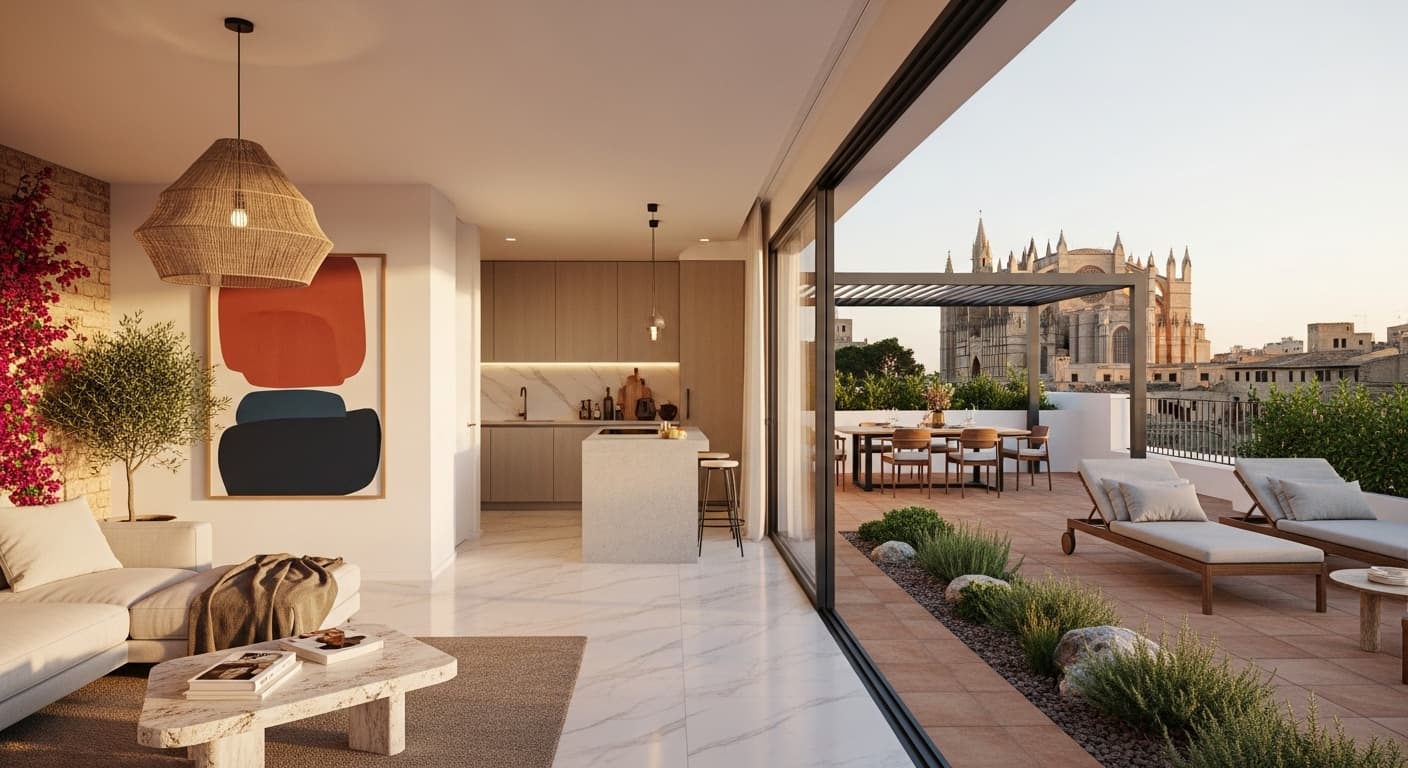
The Expat Buyer's Guide to Interior Design in Mallorca
Every year, thousands of international buyers purchase property in Mallorca. They come from Germany, the United Kingdom, Scandinavia, the Netherlands, France, and increasingly from North America and the Middle East. They are drawn by the island's extraordinary beauty, its Mediterranean climate, its excellent infrastructure, and a quality of life that is genuinely difficult to match anywhere in Europe. But between signing the purchase contract and moving in, there lies a territory that many buyers navigate with insufficient preparation: interior design.
Having worked with dozens of international clients over the past decade—helping them transform newly purchased properties into homes that reflect both their personalities and the island's character—I have developed a deep understanding of the questions, concerns, and surprises that arise during this process. This guide distils that experience into practical advice for anyone considering a property purchase in Mallorca.
The decisions you make about interior design before and immediately after buying will significantly affect your enjoyment of the property, your renovation budget, and the long-term value of your investment. Whether you are purchasing a penthouse in Santa Catalina, a townhouse in Old Town Palma, a finca in the countryside near Pollença, or a modern villa in Son Vida, the principles in this guide apply.
Understanding Mallorca's Property Types
The Finca
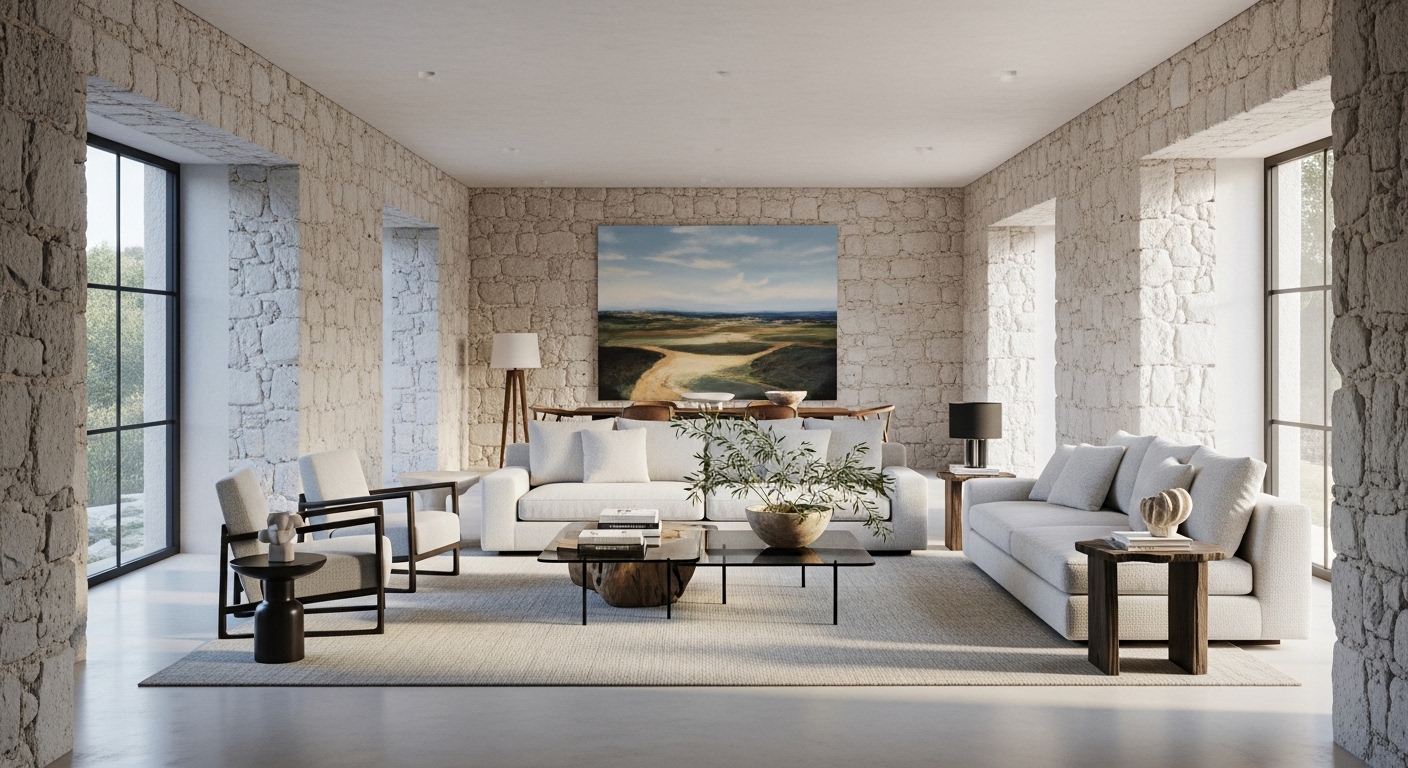
The finca is the quintessential Mallorcan rural property. These former farmhouses range from modest two-room structures to sprawling estates with multiple buildings, courtyards, and agricultural land. Fincas are characterised by thick stone walls (often 60-80cm), exposed timber beam ceilings, terracotta tile floors, and a general orientation toward the land rather than the sea.
From a design perspective, fincas offer tremendous character but also significant challenges. The thick walls that provide excellent thermal insulation also make running new electrical and plumbing lines expensive and disruptive. Window openings are typically small—originally designed to keep heat out—which means interior spaces can feel dark. Many fincas have accumulated generations of modifications, resulting in irregular floor levels, inconsistent ceiling heights, and room layouts that may not suit contemporary living patterns.
Before purchasing a finca, I advise clients to commission a thorough structural survey that goes beyond the standard legal requirements. This should include an assessment of the roof structure (traditional Mallorcan roofs use a system of timber beams and reed matting that may have deteriorated), the condition of stone walls (rising damp is common in properties that lack adequate drainage), and the state of existing services (many rural fincas have antiquated electrical systems and rely on septic tanks rather than mains sewage).
The Townhouse (Casa de Pueblo)
Palma's old quarter and the island's historic villages—Pollença, Sóller, Artà, Santanyí—contain thousands of traditional townhouses. These typically tall, narrow properties are built wall-to-wall along the street, with the characteristic pati (courtyard) providing light and ventilation to the interior. Many date from the 17th to 19th centuries and are subject to heritage protection regulations that restrict external modifications.
The design opportunities in a townhouse are extraordinary. Original features—stone staircases, vaulted ceilings, decorative tile floors, carved stone doorways—provide a level of architectural richness that no new build can replicate. However, the constraints are equally significant. Heritage regulations may prohibit changes to the facade, window sizes, or roof profile. Interior walls may be load-bearing and cannot be removed without structural engineering. Floor plans are often vertical rather than horizontal, with living spaces spread across three or four levels connected by narrow staircases.
The Modern Apartment
Mallorca's apartment market ranges from modest studio flats in suburban Palma to luxury penthouses in Portixol, Santa Catalina, and the Paseo Marítimo. Modern apartments typically offer open-plan layouts, large windows, and contemporary infrastructure (underfloor heating, air conditioning, fibre-optic internet) that older properties lack.
The design considerations for apartments centre on maximising the sense of space and light. In smaller apartments, this means careful furniture selection, integrated storage solutions, and a colour palette that visually expands the rooms. In larger penthouses and duplexes, the challenge shifts to creating distinct zones within an open floor plan while maintaining visual flow.
The Villa
Modern villas, particularly in areas like Son Vida, Andratx, Bendinat, and the southwest coast, represent the luxury end of Mallorca's property market. These properties are often architect-designed, with contemporary aesthetics emphasising horizontal lines, floor-to-ceiling glazing, and seamless indoor-outdoor transitions.
While villas may appear to need less design intervention than older properties, the reality is that many are delivered in a state that architects call "shell and core"—structurally complete but without finishes, fittings, or furnishings. Buyers may need to budget for kitchens, bathrooms, flooring, lighting, and all soft furnishings, which can represent 20-40% of the purchase price.
What to Check Before Buying: A Design-Informed Perspective
Structural Assessment
Beyond the standard survey, look for signs that indicate future renovation costs: cracks in load-bearing walls (which may indicate foundation movement), water staining on ceilings (suggesting roof or plumbing issues), musty odours (indicating damp or inadequate ventilation), and sagging floors or ceilings (pointing to structural timber decay). In older properties, insist on an assessment of the roof structure, the foundation system, and the condition of any retaining walls.
Orientation and Natural Light
In Mallorca, orientation is critical. South-facing rooms receive sunlight throughout the day and can become uncomfortably hot in summer without adequate shading. North-facing rooms are cooler but may feel gloomy in winter. East-facing rooms enjoy beautiful morning light, while west-facing rooms get intense afternoon sun. The ideal Mallorcan home has a mix of orientations, with living spaces facing south or southwest (with good shade systems) and bedrooms facing east or north.
When viewing a property, visit at different times of day if possible. The quality of light at noon in July will be dramatically different from that on a January afternoon. Pay attention to neighbouring buildings or trees that may block light, and consider how the light will change as surrounding developments are completed.
Ceiling Height and Volume
Traditional Mallorcan properties often have generous ceiling heights—3 metres or more in principal rooms. This volume is a tremendous design asset, allowing for statement lighting fixtures, tall bookcases, and a general sense of grandeur. Modern apartments, by contrast, may have standard ceiling heights of 2.5-2.7 metres, which can feel constraining, particularly in open-plan layouts.
Outdoor Space Potential
Evaluate the outdoor spaces not just for their current state but for their potential. A neglected rooftop terrace could become a stunning outdoor living room with sea views. A walled garden might host a plunge pool, outdoor kitchen, and dining area. A north-facing courtyard could become a cool, shaded retreat planted with ferns and shade-loving species. The cost of developing outdoor spaces is often lower than interior renovation, and the return in terms of livability is enormous.
Budgeting for Renovation After Purchase
This is perhaps the area where international buyers most frequently underestimate costs. In my experience, buyers should budget for renovation and furnishing as follows:
- Light refresh (painting, new fixtures, soft furnishings): 5-10% of purchase price
- Moderate renovation (new kitchen, bathroom updates, flooring, lighting): 15-25% of purchase price
- Major renovation (structural changes, new services, full interior fit-out): 30-50% of purchase price
- Complete finca restoration: Renovation costs can equal or exceed the purchase price
These figures may seem high, but they reflect the reality of construction costs in Mallorca, which have risen significantly in recent years due to demand pressure, material cost inflation, and a shortage of skilled tradespeople. Labour costs on the island are typically 20-30% higher than mainland Spain, and project timelines tend to be longer due to the availability of specialist craftspeople and the complexity of working with historic structures.
I strongly recommend that clients set aside a contingency of 15-20% above their estimated renovation budget. In older properties, unexpected discoveries—hidden structural issues, asbestos in older buildings, archaeological finds that require professional assessment—are not uncommon and can add significant costs.
Working with Local Professionals
The Mallorcan design and construction industry operates somewhat differently from what many international buyers are accustomed to. Understanding these differences can prevent frustration and ensure a smoother project.
Architects
In Spain, architects hold a more central role in the construction process than in many other countries. For any project involving structural modifications, a licensed architect (arquitecto) must produce the project documentation and oversee the construction. Architects also handle the complex process of obtaining building permits (licencias de obra) from the local municipality, which can take several months.
Interior Designers
Interior designers in Mallorca work across a spectrum from project management and space planning to full turnkey delivery including furniture procurement, art curation, and styling. When selecting a designer, look for someone with specific experience on the island—someone who knows local suppliers, understands the particular challenges of Mallorcan properties, and has established relationships with reliable tradespeople.
Builders and Tradespeople
Finding reliable builders in Mallorca is one of the most common challenges faced by international property owners. The construction sector on the island has been operating at near-full capacity for several years, which means that the best contractors are booked months in advance. Personal recommendations from your architect or designer are invaluable. Be wary of contractors who offer significantly lower prices than competitors—this often indicates corners being cut on materials or a reliance on less experienced labour.
Import Regulations for Furniture and Furnishings
If you are moving to Mallorca from another EU country, you can bring your existing furniture and belongings without customs duties or import taxes, provided they have been in your possession for at least six months. However, transporting large items to the island involves sea freight, which adds cost and logistical complexity.
For buyers coming from outside the EU—particularly from the UK post-Brexit, the United States, or the Middle East—import regulations are more complex. Customs duties of up to 4.7% may apply to furniture imports, plus Spanish VAT (IVA) at 21%. There are exemptions for personal effects when establishing a primary residence, but these require careful documentation and must be arranged before the goods arrive at the Spanish port.
In many cases, I advise clients that it is more practical—and often more cost-effective—to furnish their Mallorca home locally. The island has an excellent selection of furniture showrooms, antique dealers, and artisan workshops. Sourcing locally also ensures that your furnishings are appropriate for the island's climate and aesthetic context, and eliminates the risk of damage during international shipping.
Climate Considerations for Materials and Finishes
Mallorca's climate is a significant factor in material selection. The island experiences hot, dry summers with temperatures regularly exceeding 35°C, mild but damp winters, high UV radiation, and salt-laden air near the coast. These conditions affect materials in specific ways that buyers from northern Europe may not anticipate.
- Wood: Solid timber expands and contracts significantly with humidity changes. Engineered wood or locally sourced hardwoods (olive, almond, carob) are generally more stable than imported softwoods. Exterior timber must be treated with UV-resistant and marine-grade finishes near the coast.
- Fabric: Upholstery fabrics should be fade-resistant and, for outdoor use, specifically rated for UV exposure. Natural fibres like linen and cotton are ideal for indoor use, but synthetic outdoor fabrics (Sunbrella and similar) are essential for terraces and poolside furniture.
- Stone: Local marès stone is ideal for the climate but requires sealing in wet areas. Imported marble and limestone may be more porous than expected and can stain or etch without proper treatment.
- Metal: Near the coast, salt air accelerates corrosion. Stainless steel (marine grade 316), powder-coated aluminium, and bronze are the most durable choices for exterior metalwork. Standard iron and mild steel will rust rapidly without regular maintenance.
- Paint: High-quality mineral paints and lime washes perform best in the Mallorcan climate, allowing walls to breathe while resisting the growth of mould and algae. Standard acrylic paints can blister and peel on exterior surfaces exposed to intense sun.
Insurance and Permits
Renovation projects in Mallorca require various permits depending on their scope. Minor works (painting, replacing fixtures, like-for-like repairs) typically require a comunicación previa—a simple notification to the local council. More significant works (structural modifications, changes to layout, new installations) require a licencia de obra mayor, which involves architect-produced documentation and can take 2-6 months to obtain.
Properties in heritage-protected areas—including most of Palma's old quarter and the centres of many villages—are subject to additional restrictions overseen by the Comisión de Patrimonio. These restrictions can affect everything from window design to the colour of exterior paint, and navigating them requires an architect experienced in heritage work.
Insurance during renovation is essential. Standard home insurance policies typically exclude cover during construction work. You should ensure that your contractor carries adequate liability insurance (seguro de responsabilidad civil) and that you have a construction-phase insurance policy (seguro de obra) that covers damage to the property, theft of materials, and third-party liability.
After renovation, update your home insurance to reflect the increased value of the property, including the cost of fixtures, fittings, and furnishings. Many international buyers underinsure their Mallorca properties, particularly regarding contents cover for designer furniture, artwork, and high-end kitchen and bathroom installations.
A Timeline for Your Mallorca Property Project
Understanding the typical timeline helps set realistic expectations:
- Pre-purchase assessment (2-4 weeks): Structural survey, design feasibility study, preliminary cost estimate.
- Design development (4-8 weeks): Space planning, material selection, detailed design drawings, final budget.
- Permit application (2-6 months): Architect documentation, municipal review, heritage commission review if applicable.
- Construction tender (2-4 weeks): Obtaining quotes from contractors, reviewing proposals, selecting builder.
- Construction phase (3-12 months): Depending on scope, from a light refresh to a major renovation.
- Furnishing and styling (4-8 weeks): Furniture delivery, artwork installation, accessorising, final adjustments.
For a comprehensive renovation, expect the entire process from purchase to move-in to take 12-18 months. For a finca restoration, 18-24 months is realistic. Planning ahead and engaging your design team early—ideally before completing the purchase—can significantly compress these timelines.
The best time to think about interior design is before you buy, not after. Understanding a property's design potential—and its limitations—can save you tens of thousands of euros and months of frustration.
Final Advice for International Buyers
Buying property in Mallorca is an exciting prospect, and the island rewards those who approach the process thoughtfully. My strongest advice is this: invest in professional guidance early. A consultation with an interior designer before you purchase can identify hidden costs, reveal untapped potential, and help you make a more informed decision about which property to buy.
Mallorca has a way of getting under your skin. Its light, its landscape, its gentle pace of life, and the warmth of its people make it one of the most rewarding places in Europe to call home. With careful planning and the right professional support, your property here can become not just a house but a home that enhances your life for decades to come.
If you are considering a purchase in Mallorca and would like a design-informed perspective on a property you are viewing, or if you have already bought and are planning your renovation, I would be happy to discuss how my studio can help you create the Mallorcan home you envision.